
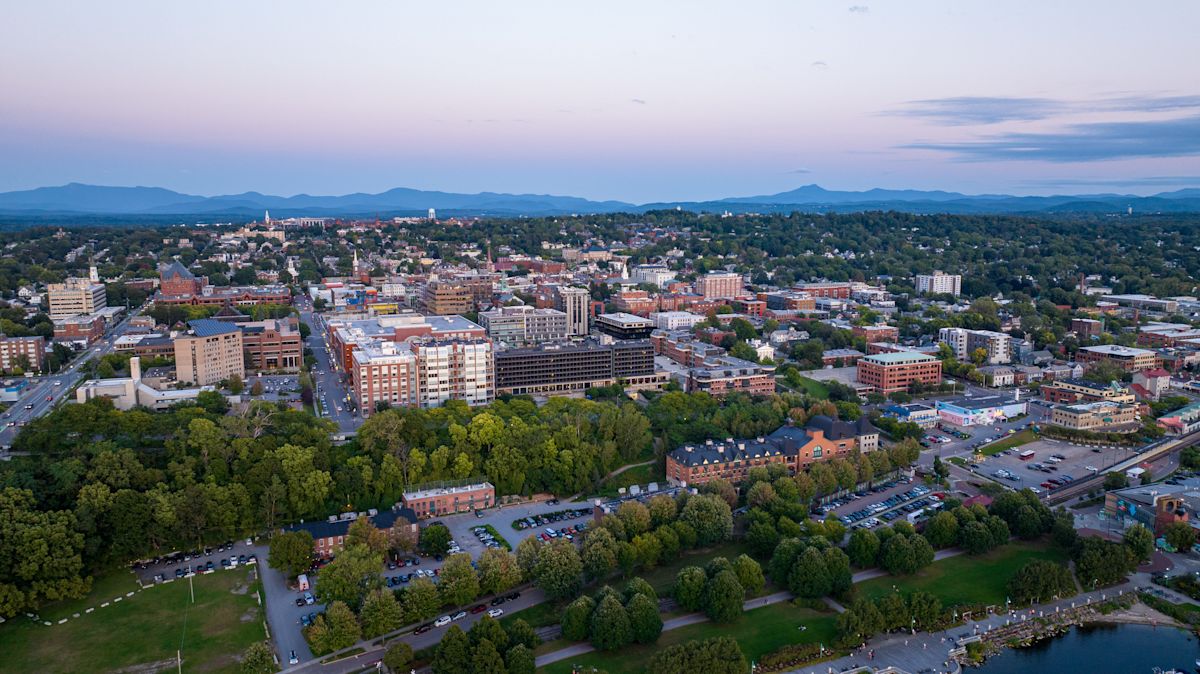
Vermont achieved a notable climb in a newly released national quality-of-life assessment, advancing into the upper half of the country after finishing outside the top tier in previous evaluations. According to the 2026 edition of WalletHub's annual "Happiest States in America" study, the Green Mountain State secured the No. 22 position overall, reflecting measurable gains in workplace conditions, personal leisure, and civic safety.
The comprehensive study examined all 50 states across a wide array of measurable criteria to determine where Americans experience the highest levels of life satisfaction. WalletHub structured its assessment around several foundational pillars of daily living, including emotional and physical well-being, work environment quality, financial security, and the strength of community environments.
The release of the latest index arrives at a time when many households across the country are grappling with widespread economic uncertainty. Citing recent Gallup survey findings, the report emphasized that just 44% of U.S. adults currently describe themselves as "very satisfied" with their overall lives. Researchers noted that navigating these challenges requires a delicate balance of physical wellness, stable employment, rewarding social connections, and dependable economic security.
Vermont’s placement at No. 22 represents a meaningful jump of seven positions compared to the prior year's standings. In the 2025 study, the state was slotted at No. 29 overall, demonstrating that recent improvements across key civic and workplace categories have helped propel the state upward, even though it remains just shy of the nation's top twenty.
A closer look at the study’s component metrics reveals several areas where Vermont outperformed the rest of the nation. The state secured the No. 1 ranking in the entire country for its adequate-sleep rate, highlighting strong rest habits among residents. Furthermore, Vermont took the top spot nationwide for sports participation and was rated first overall in public safety, showcasing a healthy, active, and secure environment for its population.
The state also earned outstanding marks in categories related to labor conditions and time management. Vermont recorded the second-fewest mean work hours in the country, pointing to a culture that emphasizes personal time outside of professional obligations. Additionally, the state tied with Hawaii, Montana, and South Dakota for the second-lowest long-term unemployment rate, reflecting durable underlying stability in its workforce.
When examining the broader overarching pillars, Vermont experienced contrasting outcomes. The state performed exceptionally well in community and environment, capturing the No. 7 spot nationally, and performed strongly in work environment, where it placed No. 9. However, its overall trajectory was somewhat tempered by a No. 31 ranking in the emotional and physical well-being subcategory, preventing the state from breaking into the top 10.
In the final nationwide tally, Vermont settled directly between Florida, which ranked just ahead at No. 21, and Kansas, which followed immediately behind in the No. 23 position. The state’s overall score placed it squarely among the middle tier of states that exhibit strong community foundations alongside specific areas with room for growth.
Demographic information from the U.S. Census Bureau provides additional context on the population residing in communities such as Burlington, Montpelier, and Stowe. As of July 2025, Vermont had an estimated population of approximately 644,600 residents spread across roughly 273,400 households, with an average of 2.28 persons per household. Census figures also show that the state's median household income between 2020 and 2024 stood at $81,203.
At the very top of the national happiness leaderboard, Hawaii claimed the No. 1 spot as the happiest state in America for 2026. The Aloha State was followed closely by New Jersey in second place, Utah in third, Idaho in fourth, and Maryland rounding out the top five. Other top performers included Nebraska at No. 6, Connecticut at No. 7, Minnesota at No. 8, California at No. 9, and neighboring New England state New Hampshire at No. 10.
At the opposite end of the spectrum, several states struggled across multiple quality-of-life and economic indicators. West Virginia finished in last place at No. 50, preceded by Louisiana at No. 49, Arkansas at No. 48, Alaska at No. 47, and Kentucky at No. 46, highlighting ongoing regional disparities in well-being and economic opportunity across the country.
To construct the comprehensive index, WalletHub analyzed a wide variety of indicators that directly influence individual and community welfare. The researchers assessed factors ranging from mental health access and physical healthcare quality to broader economic conditions, job security, community safety, social engagement, and the availability of leisure time.
WalletHub analyst Chip Lupo highlighted that the highest-ranking states tend to excel across multiple interconnected domains rather than relying on a single economic or geographic advantage. Lupo explained that top-tier states consistently offer an above-average quality of life across diverse areas, encompassing strong state economies, excellent physical and mental healthcare, plentiful leisure time, and favorable weather conditions.
Lupo also elaborated on the relationship between financial resources and individual contentment, addressing the longstanding debate over income and life satisfaction. He noted that while there is truth to the saying that money cannot buy happiness, earning sufficient income to live comfortably remains an essential baseline for residents across the nation.
However, the analyst emphasized that once basic financial comfort is established, additional wealth does not necessarily increase personal happiness as significantly as other lifestyle factors. According to Lupo, long-term fulfillment is driven much more heavily by pursuing engaging hobbies, maintaining strong social relationships, and having ample opportunities for personal growth—areas where states with balanced work hours and active lifestyles, such as Vermont, continue to demonstrate distinctive strengths.







(0)