
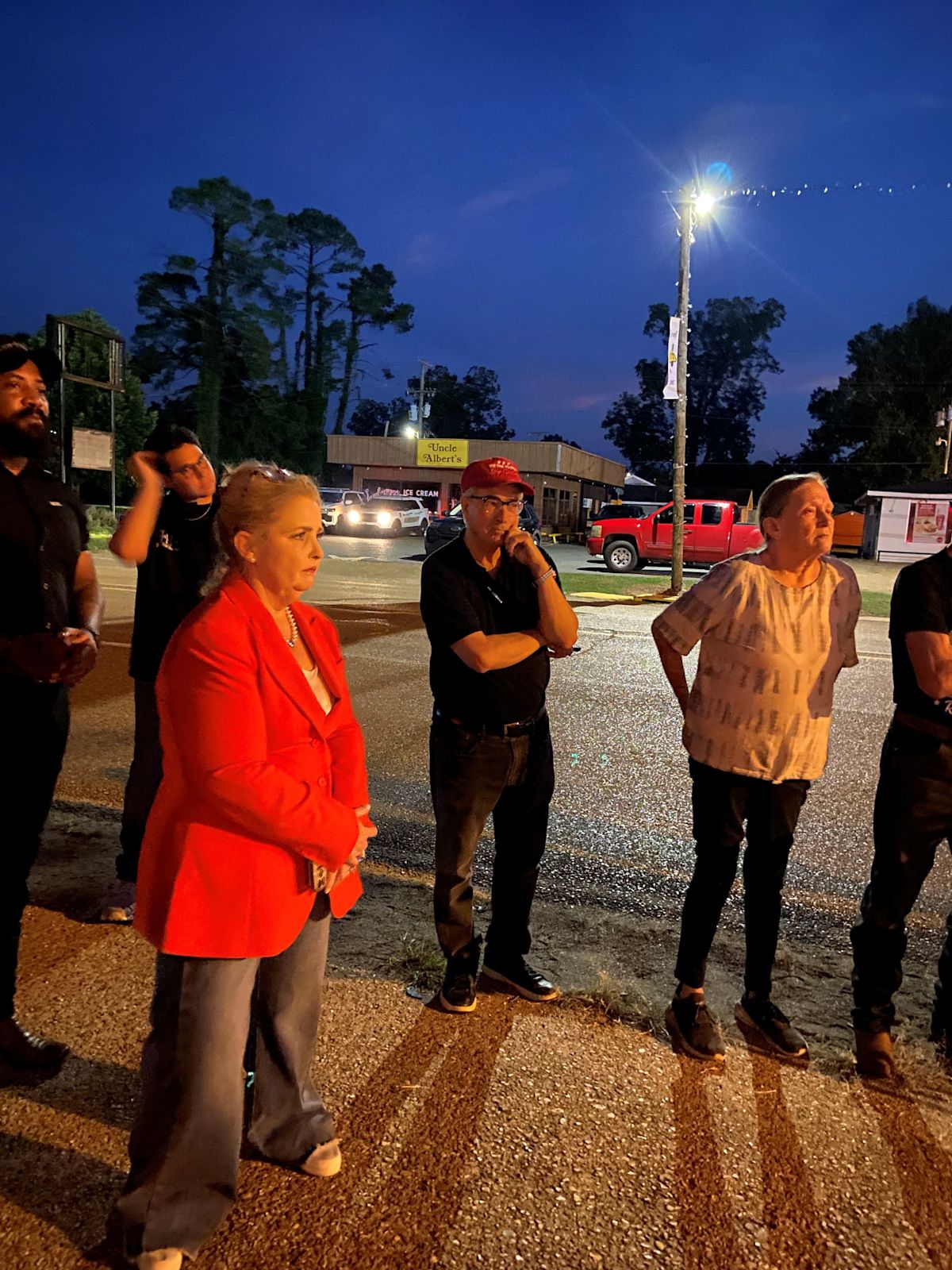
Residents and grassroots activists gathered in a parking lot in Boyce, Louisiana, on a Saturday evening to protest the rapid expansion of large-scale technological infrastructure and demand greater local oversight regarding artificial intelligence facilities. The demonstration was organized around growing community concerns surrounding a multi-billion-dollar data center currently being constructed on rural land just outside the Rapides Parish town.
The Boyce event served as the second stop of the nationwide "AI Data Center Revolt" tour, spearheaded by Amy Kremer, chair of the conservative advocacy organization Humans First. The group, which describes its mission as advocating for an "America First" artificial intelligence policy, launched its campaign in Dallas following a mini Republican convention, proceeded to Austin, Texas, and stopped in Central Louisiana ahead of a scheduled tour finale in Washington, D.C., on September 16.
The primary catalyst for the tour’s stop in Rapides Parish is Data Forge 1, a $3.6 billion AI factory data center under construction on former agricultural land near Boyce. The massive high-tech installation is being built by Applied Digital, a technology company headquartered in Dallas, and has drawn sustained scrutiny from nearby residents since its initial announcement.
Speaking before the crowd, Kremer clarified that her organization is not opposed to the development of artificial intelligence or technological progress in general. Instead, she argued that the decision to introduce massive server infrastructure should be placed entirely in the hands of the individual communities that will live alongside them, rather than being imposed without local consent.
Kremer stressed that while advanced technology is built on American resources, domestic energy grids, geographical land, citizen data, and taxpayer financing, everyday citizens have been excluded from the decision-making process. She told attendees that local populations currently lack a meaningful voice regarding how rapid technological shifts impact their daily lives today and in the future.
Addressing regulatory solutions, Kremer stated that Humans First does not advocate for statewide or federal bans on data center construction. Rather, the organization champions local self-determination, maintaining that municipal and parish voters should have the authority to elect officials who reflect their preferences on whether to permit and build such facilities.
The parking lot rally mirrored persistent skepticism that has circulated through Boyce since early summer. During a public informational meeting held in June, corporate representatives from Applied Digital, officials from the regional economic development organization Louisiana Central, and representatives from power utility Cleco attempted to explain the project's scope, operational footprint, and economic benefits, but attendees largely met those assurances with pushback.
Local resistance has also been bolstered by established community organizations, including Save My Louisiana, a grassroots group founded in 2025 that originally organized to fight carbon capture sequestration initiatives across the state before turning its attention to the rapid development of large data facilities.
Gary Musgrove, the president of Save My Louisiana, spoke to attendees about significant operational uncertainties surrounding the Boyce development, placing a particular emphasis on the enormous electrical demands required to power Data Forge 1. Musgrove noted that utility provider Cleco has entered into a contract to supply 430 megawatts of electrical power to the site.
Musgrove contextualized the sheer scale of that electrical commitment, explaining that 430 megawatts is roughly equivalent to the power required to support 250,000 private residences. He added that supplying this volume of electricity amounts to approximately 25 percent of Cleco's entire power generation output, raising pressing questions about grid stability and resource allocation.
The grassroots leader raised concerns about how the utility will fulfill such high demand and whether local property owners might face future land expropriation to accommodate expanded transmission corridors. Musgrove noted that while eminent domain has not yet been exercised for the project, the possibility of expanded infrastructure remains a primary motivator for his group's involvement.
Musgrove expressed additional worries regarding potential alternatives if grid capacity falls short, questioning whether surrounding neighborhoods might eventually be subjected to the continuous noise of up to 196 on-site industrial generators deployed to meet the facility's 430-megawatt requirement. He noted that when residents asked direct technical questions at the previous public forum, representatives declined to provide specific details, citing proprietary business information.
The rally also highlighted national political dialogue on technological infrastructure, with Musgrove referencing public statements from Donald Trump regarding data center developments. Those remarks noted that while localities resisting data centers risk missing out on broader economic development opportunities, expanding computing facilities should ultimately be responsible for generating their own dedicated electrical power.
The event brought together various regional stakeholders, including Dustin McAnn, a rancher and educator who resides in neighboring LaSalle Parish and works in Rapides Parish, underscoring how concerns over technological land use, grid capacity, and local governance continue to resonate across Central Louisiana's rural communities.








(0)