
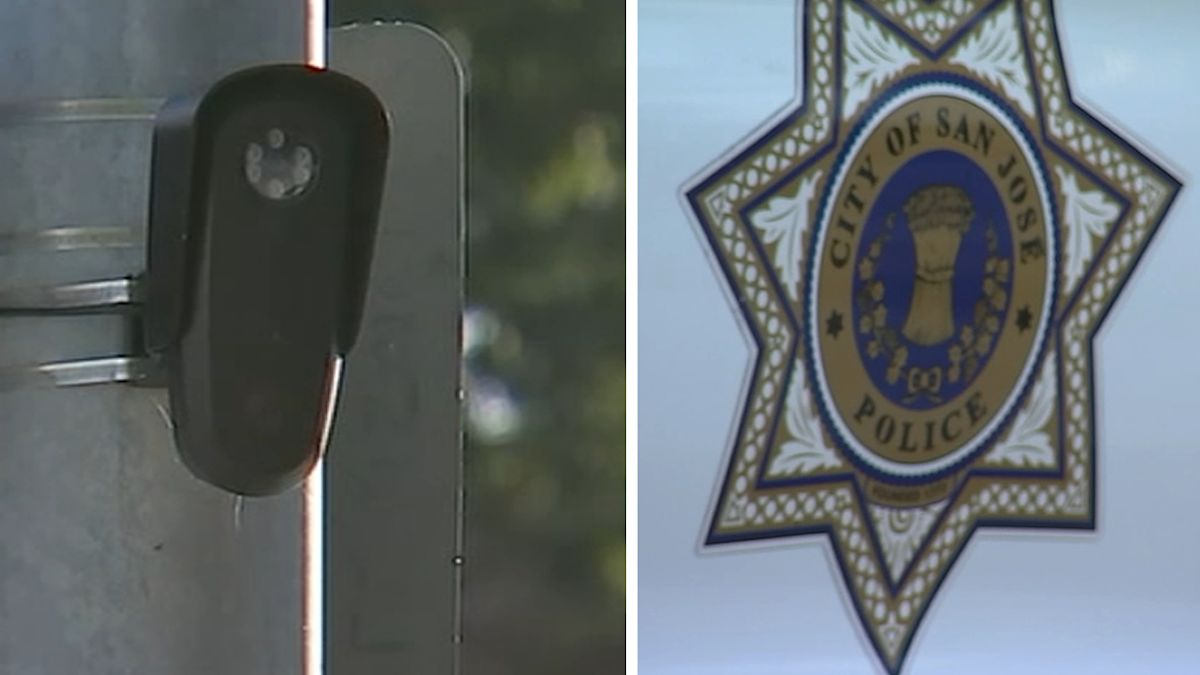
A San Jose police officer has been terminated from the police force following an internal determination that he improperly accessed automated license plate reader data and relayed confidential location details to a relative accused of domestic violence.
According to findings released by the San Jose Police Department, the officer utilized his personal smartphone to log into the municipality's network of Flock Safety cameras. Using the automated system, the officer retrieved the precise geographical whereabouts of a targeted vehicle and transmitted that sensitive information directly to his cousin.
The recipient of the data, who was actively identified as a suspect in an ongoing domestic violence investigation, subsequently used the coordinates to locate his accuser, according to reporting by the Bay Area News Group.
San Jose Police Chief Paul Joseph addressed the termination forcefully, emphasizing that breaches of public integrity cannot be tolerated within the ranks of law enforcement. Joseph maintained that when an officer commits such an egregious violation of public trust, they forfeit their standing to exercise police authority or wear the uniform of the San Jose Police Department. He underscored that while the camera technology is modern, the ethical expectations governing officer conduct remain unchanged.
In addition to being dismissed from the department, the former officer's case has been formally submitted to the California Commission on Peace Officer Standards and Training. The state oversight body will conduct a decertification review, an administrative process that could permanently revoke his peace officer license and prohibit him from serving in law enforcement anywhere within the state of California.
Despite the severity of the internal policy breach and the resulting endangerment of the victim, neither the former police officer nor his cousin currently faces criminal prosecution.
Legal analyst and former prosecutor Steven Clark noted that the absence of criminal charges highlights a notable loophole within existing state statutes. Clark explained that because the officer held authorized credentials to log into the Flock system, his subsequent misuse of the database did not clearly breach current criminal laws designed to penalize unauthorized access to confidential law enforcement records.
Clark suggested that the incident illustrates a gap where the legal framework has failed to keep pace with rapid technological advancements in policing. He anticipated that the California State Legislature may soon intervene to craft specific legislation that classifies such database manipulation and misuse as a distinct criminal offense, preventing similar conduct from escaping criminal liability in the future.
In the immediate wake of the breach, the San Jose Police Department instituted new operational protocols regarding data access. Command staff barred all personnel from logging into the Flock license plate reader database using personal mobile devices and issued stern warnings to the entire force regarding the disciplinary consequences tied to unauthorized queries.
Additionally, department leaders announced that they have begun evaluating and testing new smart auditing software. These automated oversight tools are engineered to track system queries in real time and automatically flag suspicious searches that appear to lack a valid, lawful police purpose.
The breach has intensified broader debates surrounding the proliferation of automated surveillance infrastructure. San Jose currently maintains an operational network of nearly 500 Flock cameras stationed throughout the city to track vehicle movements.
The expanded camera grid has already faced significant legal challenges from civil liberties organizations. In 2025, the American Civil Liberties Union and the Electronic Frontier Foundation filed a joint lawsuit against the City of San Jose and its police department, arguing that widespread automated surveillance infringes upon the constitutional and privacy rights of the public.
Although a judge issued a tentative ruling last month favoring the city's legal position, the case remains unresolved pending additional proceedings. Clark observed that privacy advocacy organizations are almost certain to highlight this internal misconduct incident as key evidence illustrating the potential dangers and abuses inherent in mass surveillance networks.
Within the local community, the disclosure of the officer's actions has heightened public unease regarding data security and civil privacy. San Jose resident Lina De Marco expressed apprehension over the scale of the surveillance network, explaining that the broad monitoring infrastructure combined with potential data misuse makes her feel less secure.
Conversely, other residents maintain that automated license plate readers remain an essential asset for modern law enforcement. San Jose resident Binh Nguyen stated that around-the-clock camera monitoring serves as a vital deterrent, making it far more difficult for offenders to commit crimes unnoticed.







(0)