
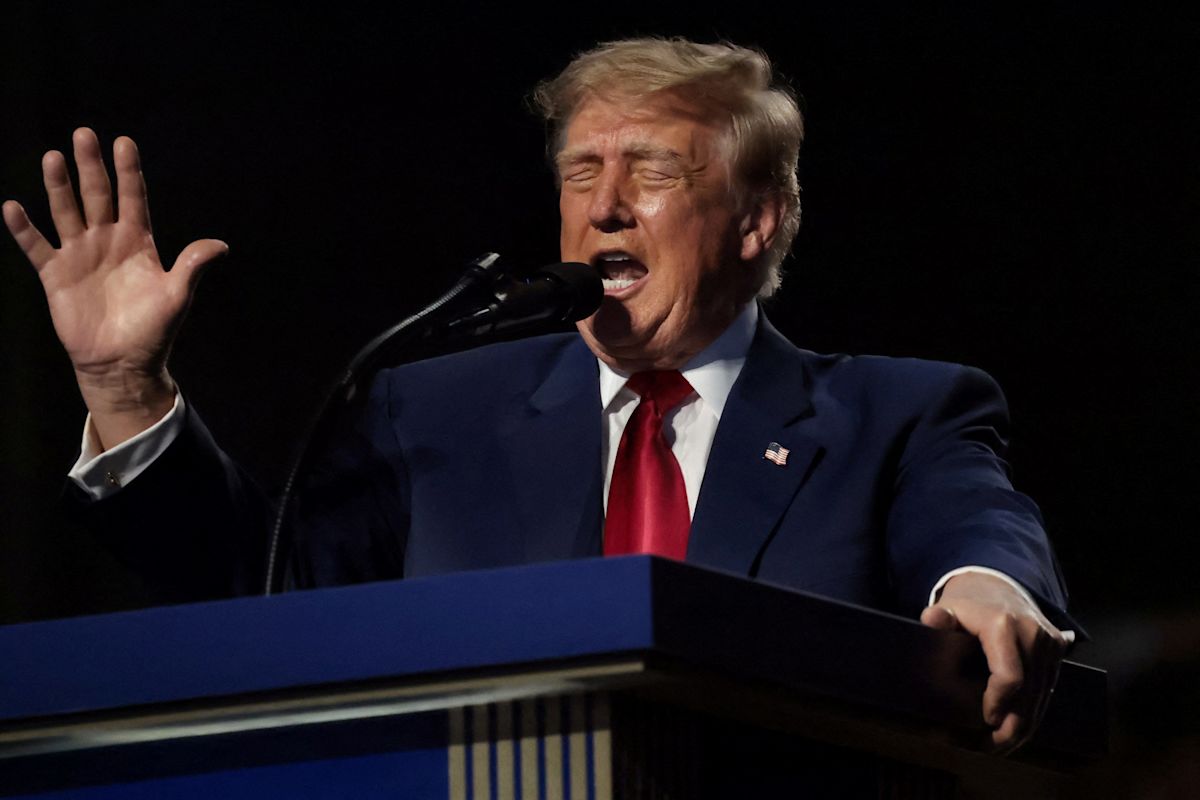
During a campaign rally held in Dallas on September 9, President Donald Trump presented a sweeping new economic proposal to voters, pledging that every American adult would receive a $5,000 dividend check. However, the proposed direct payment carries a major political condition: the Republican Party must secure victories in both the House of Representatives and the Senate in the upcoming midterm elections on November 3.
Following the rally announcement, the White House issued an official press release elaborating on the rationale behind the ambitious proposal. According to administration statements, the funding for the multi-billion-dollar initiative would stem directly from broader economic expansion. The White House asserted that the administration had successfully stimulated trillions of dollars in fresh private investment while simultaneously implementing an unprecedented nationwide crackdown on wasteful government spending.
Despite the administration's optimistic rhetoric, fiscal policy analysts and budget watchdogs have voiced immediate concerns over the feasibility and macroeconomic fallout of such a plan. Nonpartisan economic researchers estimate that distributing $5,000 checks to every adult in the country would carry a massive price tag of approximately $1.2 trillion. Analysts warn that injecting this level of capital into the economy could substantially widen the federal debt and exacerbate existing inflationary pressures.
The Committee for a Responsible Federal Budget provided further context regarding the sheer scale of the proposal, noting that the $1.2 trillion expenditure would exceed the combined total of all three direct stimulus relief payments issued during the COVID-19 pandemic. Furthermore, the organization calculated that the cost would surpass the projected expenses of the administration's signature "One Big Beautiful Bill Act" for the coming year and would be 50% larger than the entire primary federal deficit projected for 2027.
Beyond the severe budgetary implications, the proposed dividend faces significant procedural and statutory barriers. Implementing the payments cannot be done through executive action alone and would necessitate formal legislative approval from Congress. Even in the event of a Republican sweep of both legislative chambers, drafting, debating, and passing the required statutory framework could take months, with the measure facing potential judicial review and challenges in the Supreme Court.
This is not the first time the president has dangled substantial direct payments before the public without establishing a viable legislative pathway to deliver them. In early 2025, Trump publicly floated a similar $5,000 stimulus payment, claiming the disbursements would be funded through structural cost savings identified by the Elon Musk-led Department of Government Efficiency.
That early efficiency initiative, however, failed to produce the promised payouts for everyday Americans. The Department of Government Efficiency encountered operational challenges and was officially dissolved earlier this year, leaving the proposed savings-backed checks completely unfulfilled.
The administration revisited the concept of direct stimulus again in November 2025, when Trump pledged to send $2,000 checks to citizens across the nation. That proposal was framed as a direct relief measure designed to alleviate the financial pressures and consumer costs resulting from aggressive, across-the-board tariff policies enacted against all United States trading partners.
Under that framework, revenue collected from the extensive import levies was supposed to finance the stimulus checks. However, the program encountered a decisive roadblock when the Supreme Court ruled the sweeping tariff structure unconstitutional. With the underlying revenue stream invalidated by the nation's highest court, the likelihood of those $2,000 payments ever reaching taxpayers evaporated.
Notwithstanding those past setbacks, proponents point out that the administration has managed to deliver on select, narrower cash distribution initiatives. In December 2025, the administration successfully disbursed $1,776 "Warrior Dividend" bonus checks to all active military personnel across the armed forces.
While Trump initially claimed that the military bonuses would be financed directly through international trade tariff collections, the actual funding mechanism relied on standard legislative appropriations. Congress ultimately covered the cost of the warrior bonuses by repurposing military housing funds authorized under the sweeping "One Big Beautiful Bill" statute.
More recently, the administration rolled out a targeted savings initiative known as "Trump Accounts." This program provides a one-time $1,000 government deposit into dedicated savings accounts for American children born between 2025 and 2028, functioning as a long-term investment vehicle to help young citizens establish financial foundations.
According to figures released by the administration on July 6, approximately six million children had already been enrolled in the Trump Accounts program. This demonstrated that targeted, congressionally backed financial programs could be successfully enacted and administered when structured through formal budget channels.
Nevertheless, extending a universal $5,000 payout to every adult citizen represents a far more massive undertaking than targeted infant savings accounts or military bonuses. Economists and lawmakers on both sides of the political spectrum remain deeply skeptical that the administration can navigate the immense fiscal, legal, and legislative obstacles required to make universal dividends a reality.
As the November 3 midterm elections draw closer, the promised $5,000 dividend stands as one of the administration's most prominent campaign centerpieces. Yet with an estimated $1.2 trillion requirement, the memory of previous unfulfilled stimulus promises, and inevitable congressional hurdles, the path to putting checks into Americans' bank accounts remains highly uncertain.








(0)