
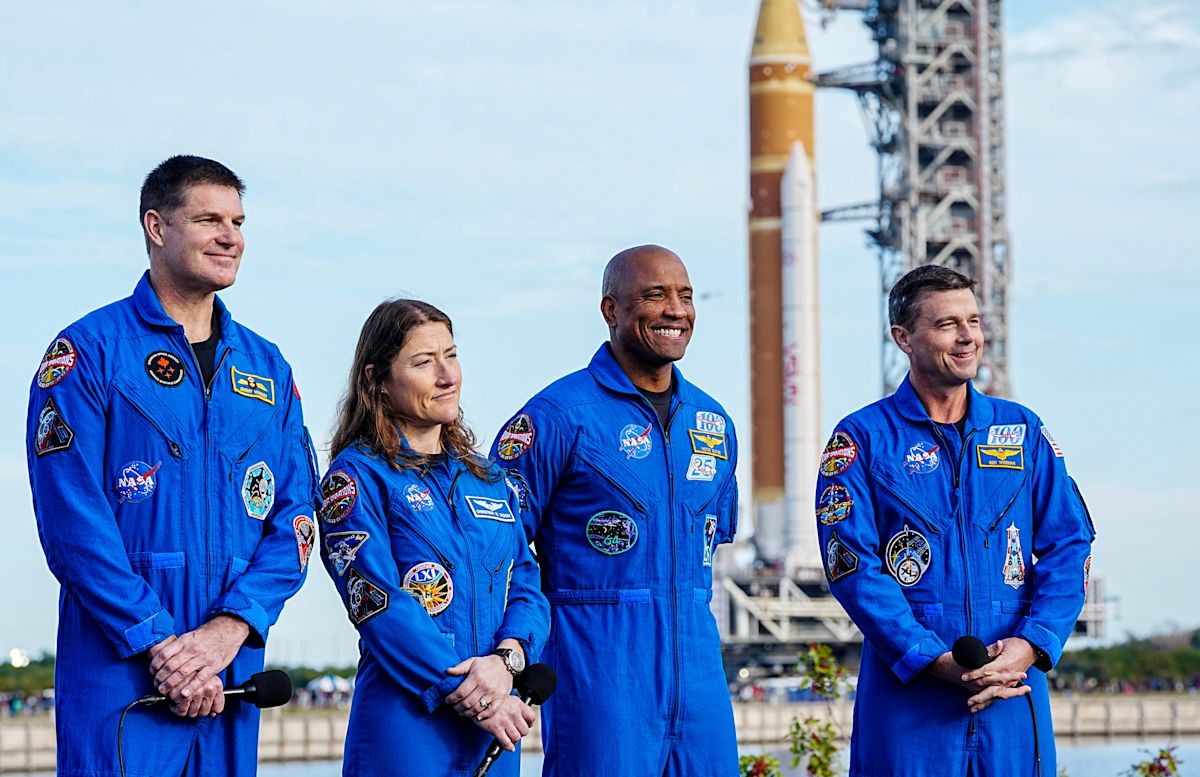
Florida’s aerospace corridor continues to demonstrate robust activity as recent developments highlight both active commercial spaceflight operations and forward-looking policy debates. At the forefront of this momentum is a high-profile satellite deployment conducted by SpaceX for global satellite operator SES, paired with an emerging legislative and institutional push to establish a dedicated United States Space Academy. Together, these developments represent the ongoing evolution of the state’s Space Coast from a historic launch site into a comprehensive hub for technical education, commercial industry, and national defense strategy.
The commercial launch schedule gained fresh traction with SpaceX’s successful execution of a mission dedicated to deploying an SES communications satellite from Florida’s primary spaceport facilities. Utilizing the Falcon 9 launch platform, the mission represents another critical operational step in modernizing orbital telecommunications infrastructure. The flight trajectory was designed to place the complex payload into a precise transfer orbit, ensuring uninterrupted integration with existing satellite constellations that deliver global data coverage.
Payloads managed by SES play an indispensable role in international connectivity, delivering high-throughput broadcasting, enterprise networking, and secured governmental communications. Modern satellite platforms require sophisticated onboard processing, high-frequency signal management, and resilient power architectures to sustain continuous operation over multi-year lifespans. SpaceX’s successful deployment reinforces the growing reliance of commercial telecom operators on reliable, rapid-cadence launch providers to refresh and expand their orbital capacity.
The ongoing operational pace maintained by SpaceX in Florida reflects the maturing state of reusable rocket technology. By recovering and refurbishing first-stage boosters and payload fairings, the company has drastically reduced the turnaround time between missions. This high-frequency tempo not only benefits commercial partners such as SES but also ensures dependable launch availability for government and scientific missions requiring orbital access from American soil.
In parallel with operational achievements on the launchpad, policymakers and aerospace leaders are directing renewed attention toward human capital and training through the proposed creation of a U.S. Space Academy. As orbital operations become increasingly integral to national infrastructure and defense, advocates argue that a dedicated institution is necessary to educate the next generation of space operators, orbital engineers, and strategic planners.
Proponents of the academy model point to the established service academies for the Army, Navy, and Air Force as historical precedents. They contend that the unique operational demands of space—spanning orbital mechanics, electronic warfare, satellite defense, and space situational awareness—require a focused academic and tactical curriculum that traditional military academies cannot fully provide within their broader multidisciplinary mandates.
Florida’s political leaders and aerospace advocates have positioned the state as an ideal candidate to house or support the proposed academy. Leveraging its dense concentration of aerospace contractors, research universities, and active military installations, the Space Coast offers unmatched proximity to operational spaceflight facilities. Advocates maintain that embedding educational facilities near active launch complexes provides students and trainees with direct access to real-world flight operations.
The broader goal of the Space Academy proposal is to address a critical talent shortage across both defense and private sectors. As satellite networks proliferate and space domain awareness becomes more intricate, specialized engineers and operators are urgently needed. A formalized academy would create a streamlined pathway for developing leaders capable of overseeing complex space architecture and executing defensive orbital missions.
This push for educational infrastructure aligns with a broader technological transition sweeping through the aerospace and computing sectors. Contemporary space missions rely heavily on advancements in edge computing, autonomous guidance systems, and high-performance processing hardware. Modern spacecraft must process immense quantities of operational telemetry in real time, reducing latency and operational dependency on ground stations.
The integration of machine learning and artificial intelligence into aerospace systems further underscores the need for modernized training pipelines. From automating collision-avoidance maneuvers to optimizing satellite antenna configurations, smart software systems are transforming how orbital networks operate. Developing specialists who understand both the theoretical principles of artificial intelligence and the physical realities of orbital flight is central to long-term aerospace competitiveness.
Economically, the convergence of frequent commercial launches and prospective institutional investments signals sustained growth for the regional economy. Cape Canaveral and surrounding communities have experienced substantial economic revitalization driven by the resurgence of commercial spaceflight. The addition of federal academic programs and specialized research centers would further diversify the regional economy, attracting skilled professionals and private investment.
National security considerations also continue to steer both policy debates and technological development. Orbital assets are increasingly recognized as vital components of civilian infrastructure, supporting everything from global financial transactions to navigation and emergency communications. Safeguarding these assets against electronic interference, orbital debris, and potential hostile action demands a highly skilled workforce equipped with contemporary tactical training.
The dual focus on launching advanced commercial satellites like those for SES and laying the groundwork for a dedicated military training academy illustrates the multifaceted nature of current space policy. Success in the modern space domain requires a balanced approach that combines robust industrial manufacturing and reliable launch services with rigorous intellectual and operational education.
Looking ahead, Florida remains uniquely positioned at the center of these developments. As launch providers continue to accelerate mission cadences and federal leaders evaluate institutional proposals for future space education, the state’s aerospace ecosystem is poised to maintain its strategic importance. The ongoing integration of commercial enterprise, defense readiness, and workforce development will define the next era of American space leadership.







(0)