
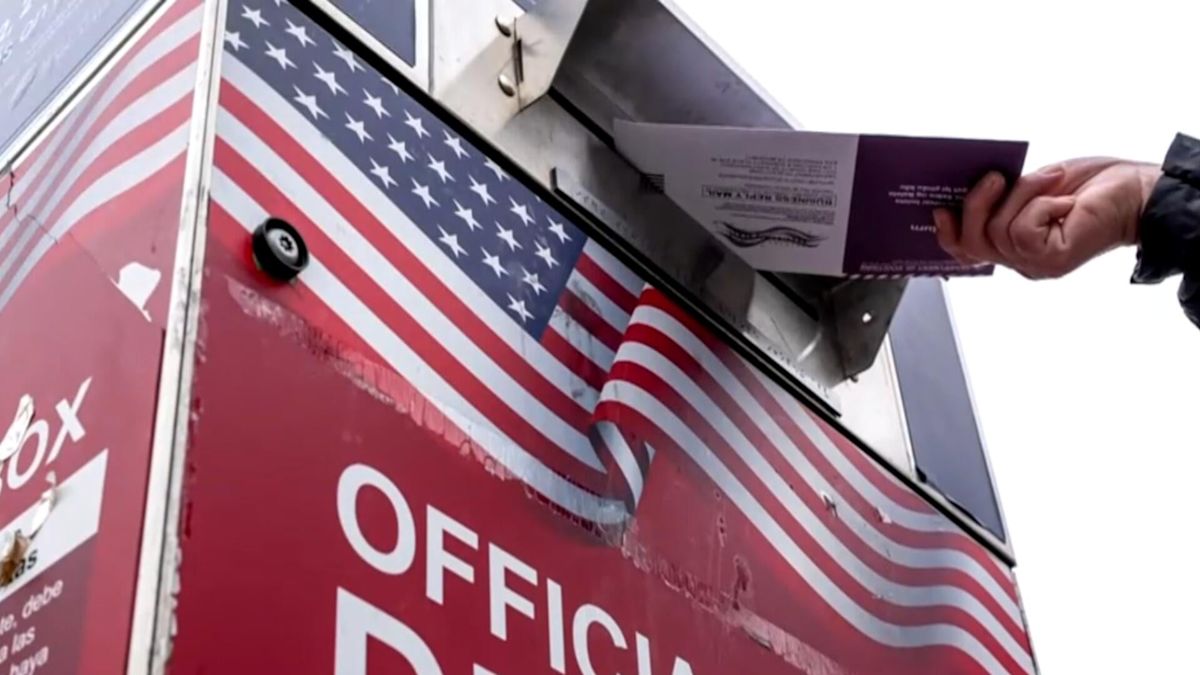
The Supreme Court has declined to allow the U.S. Postal Service to implement strict new mail voting regulations ahead of the upcoming November midterm elections, dealing a significant setback to the Trump administration. By leaving a lower court's preliminary injunction in place, the justices ensured that the contested postal measures will remain frozen while the broader legal battle plays out in court.
The high court’s directive comes at a critical juncture in the election cycle, as several states have already started dispatching mail-in ballots to voters. State and local administrators had raised urgent alarms, contending that the eleventh-hour directives would make it virtually impossible to overhaul their established voting systems in time for the fast-approaching midterms.
Under the framework finalized by the Postal Service late last month, election jurisdictions faced rigorous new mandates. The rules required mail-in ballot envelopes to conform to strict standardized designs featuring unique barcodes. Furthermore, local and state officials were mandated to upload voter information directly to an online federal portal.
The Postal Service explicitly warned that any election mail failing to satisfy these stringent technical specifications would be rejected and sent back to local election offices. This enforcement threat stoked widespread fears among voting officials, who warned that the sudden change could upend established voting programs and disenfranchise large numbers of citizens.
In a brief, unsigned order, the Supreme Court justified its intervention by noting that the federal government was unlikely to prevail on the merits of its appeal against the district court’s preliminary injunction. The decision effectively preserves the status quo for the November balloting process.
While the decision was unsigned, conservative Justice Brett Kavanaugh joined the majority in halting the regulations, penning a separate concurrence. Kavanaugh observed that although the Postal Service might possess the statutory authority to issue such rules, imposing them immediately ahead of the midterms violated the Administrative Procedure Act by being arbitrary and capricious, given that election administrators lacked adequate time to comply.
Conversely, conservative Justices Clarence Thomas and Samuel Alito registered their dissents from the order. Both justices expressed skepticism toward the legal challenge, arguing that the coalition of states suing to block the Postal Service's newly finalized framework was unlikely to demonstrate that the policy was unlawful.
Defending the regulations, the Trump administration asserted that tight oversight of mail balloting is crucial for safeguarding democratic processes. Solicitor General D. John Sauer characterized mail voting fraud as an especially harmful threat that dilutes legitimate votes and erodes the public's faith in the fairness and integrity of national elections.
Despite these assertions, the administration presented no evidence showing widespread fraud in mail balloting systems. Moreover, the push to curb mail-in procedures stands in contrast to the personal practices of President Trump, who cast his own ballot by mail in Florida elections earlier this year.
In filings submitted to the high court, Sauer insisted that the policy represents a constitutional exercise of agency power that places only modest demands on election mail. He maintained that while states hold primary constitutional authority over conducting elections, they cannot rely on the federal postal system while simultaneously claiming immunity from congressional statutes governing envelope specifications and addressee data.
A coalition of Democratic-led states alongside civil rights and voting advocacy organizations initiated the legal action, asserting that the Postal Service overstepped its legal boundaries. The challengers argued that the federal agency holds no constitutional mandate to establish operating rules for federal elections or dictate state-level voting procedures.
In their legal briefs, the plaintiffs stressed that adhering to the agency's timeline was an impossible task that would inevitably lead to widespread disenfranchisement. They warned that forcing compliance under such narrow deadlines would result in millions of citizens losing their ability to vote by mail, leaving some voters entirely unable to cast ballots.
The coalition further argued that executing the new system on short notice was deeply vulnerable to logistical failures. They warned that the abrupt transition risked severe technical disruptions, agency ineptitude, and widespread delivery delays within the postal infrastructure, threatening to trigger administrative chaos in the middle of an election.
The high court's intervention represents the latest chapter in a protracted dispute that began in late March when President Trump signed an executive order. That directive instructed the Postal Service to craft mail ballot restrictions and directed the Department of Homeland Security to assemble state-level registries identifying resident U.S. citizens.
That initial executive order triggered an immediate lawsuit from Democratic attorneys general. While U.S. District Judge Indira Talwani in Massachusetts initially enjoined key components of the administration's plan, the Supreme Court temporarily stayed her ruling on August 24 in a 6-3 decision, deeming the challenge premature because the Postal Service had not yet completed its final rulemaking process.
The agency subsequently published its finalized regulations just prior to that late August high court ruling, triggering the rapid round of renewed litigation that culminated in the justices' latest decision to keep the postal rules on hold through the midterm elections.




(0)