
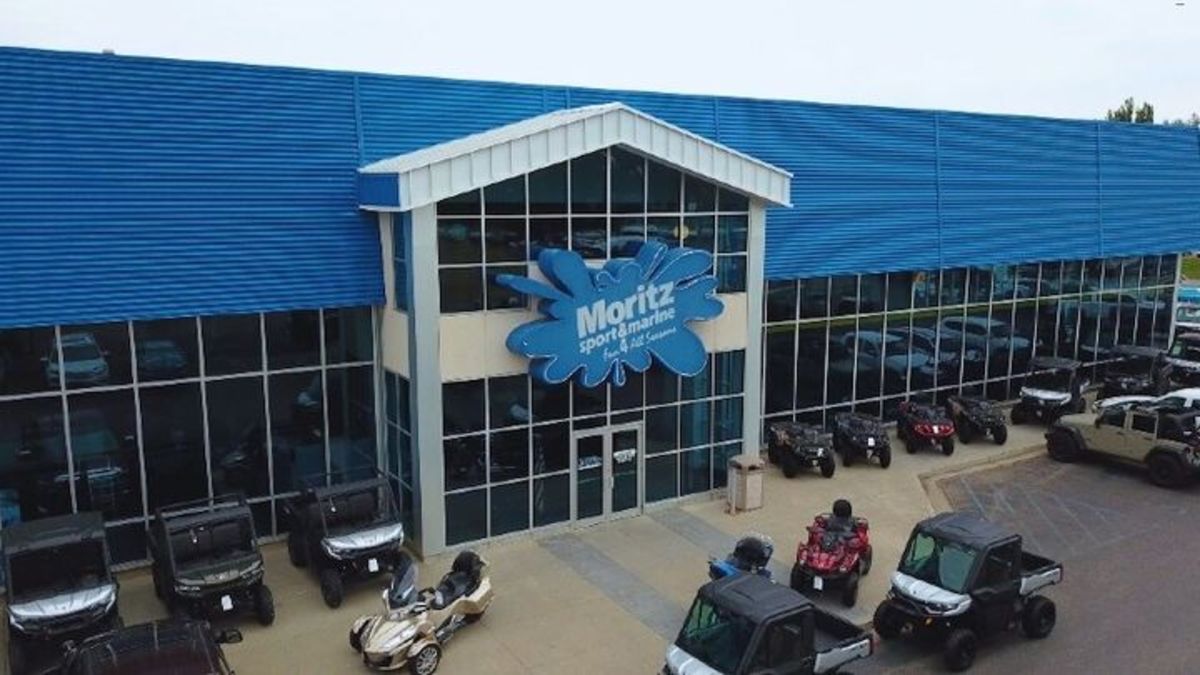
By importing the structured retail strategies long refined in the automobile sector into the powersports market, Eric Moritz has transformed his Bismarck, North Dakota dealership into a high-volume powerhouse. Operating Moritz Sport & Marine with the precision of a traditional car franchise, Moritz has demonstrated that applying automotive sales methodologies to off-road utility vehicles can yield extraordinary financial returns.
Today, the dealership moves roughly 300 new side-by-side units every year. That volume generates approximately $10 million in annual gross revenue solely from new utility-terrain and side-by-side vehicle sales. This substantial revenue stream highlights the rapidly growing commercial value of modern off-road machines and the effectiveness of a disciplined sales strategy.
In addition to its substantial new-vehicle operations, the Bismarck store maintains a bustling pre-owned department. Moritz Sport & Marine handles an estimated 200 to 300 used all-terrain vehicles (ATVs) and utility-task vehicles (UTVs) each year. This secondary market channel mirrors the trade-in and resale ecosystem commonly utilized by franchised automobile dealerships to capture buyers across diverse budget tiers.
The roots of the business are firmly planted in traditional automotive retailing. Nearly three decades ago, Moritz and his father transitioned away from the car sales sector when they purchased a local Chevrolet dealership in Bismarck. In 1997, the family restructured the facility and its operations, officially launching Moritz Sport & Marine on the foundation of automotive showroom principles.
The dealership's automotive culture was further solidified during a major ownership transition in 2020. Following the senior Moritz’s retirement that year, his equity in the company was acquired by local automobile dealership owners. This transaction integrated experienced automotive retail partners directly into the business, reinforcing the store's dedication to modern car-sales playbooks.
According to Moritz, the broader powersports industry has historically trailed the traditional auto industry by roughly five years. While this gap is partly visible in vehicle technology, Moritz emphasizes that the disparity is most pronounced in dealership management, operational structure, and overall business execution across showroom floors.
To bridge this divide, the dealership implemented a centralized, full-service sales desk designed to streamline the customer purchasing experience. Rather than shuttling buyers between isolated departments, the store organizes single-sitting consultations where the customer meets simultaneously with the sales manager, financing personnel, service advisors, and accessories specialists.
The core objective of this integrated consultation is ensuring that buyers leave the lot with a machine completely tailored to their needs, fully accessorized from day one. Moritz notes that traditional car dealerships excel at executing complete, comprehensive customer transactions, and adopting that framework helps Moritz Sport & Marine build sustainable, long-term customer relationships.
Product evolution has also played a crucial role in the dealership’s exponential growth. The Can-Am Defender line, particularly the fully enclosed cab configurations, has emerged as the business's primary revenue engine outside of its marine division. The shift represents a dramatic transformation from a decade ago, prior to the Defender's market launch, when the store sold only 10 to 15 new side-by-side units annually.
This surge in sales volume necessitated a parallel expansion across the dealership’s back-end infrastructure and maintenance operations. To support the influx of machines requiring setup, accessory installations, and routine maintenance, the business doubled its dedicated Can-Am service department, expanding the technician roster to 12 specialists in recent years.
Consumer demand in the region has increasingly centered on full-cab side-by-sides equipped with automotive-grade comforts such as integrated heating and air conditioning systems. These premium climate-controlled features have turned utility vehicles into viable options for consumers seeking durable, everyday transportation across diverse seasonal conditions.
The vehicle utility is bolstered by local regulatory frameworks in North Dakota, where off-highway machines are permitted on paved roads outside of interstate highway routes. By adding street-legal conversion equipment—including turn signals, a horn, rearview mirrors, and an official license plate—owners can legally operate their side-by-sides statewide for daily travel.
Despite strong consumer demand, rising equipment costs present an ongoing challenge for the industry. Moritz has raised concerns regarding vehicle affordability, noting that fully optioned side-by-sides packed with premium accessories and enclosed cabs are now approaching price points near $50,000, testing the upper limits of buyer budgets.
Concurrently, Moritz remains cautious regarding emerging powertrain technologies, including the electric segment following the summer debut of Can-Am's Outlander Electric. While monitoring industry electrification trends closely, the dealership is temporarily holding off on full-scale adoption due to existing battery range limitations, inadequate regional charging infrastructure, and the substantial capital required for specialized dealer tools and technician training.





(0)