
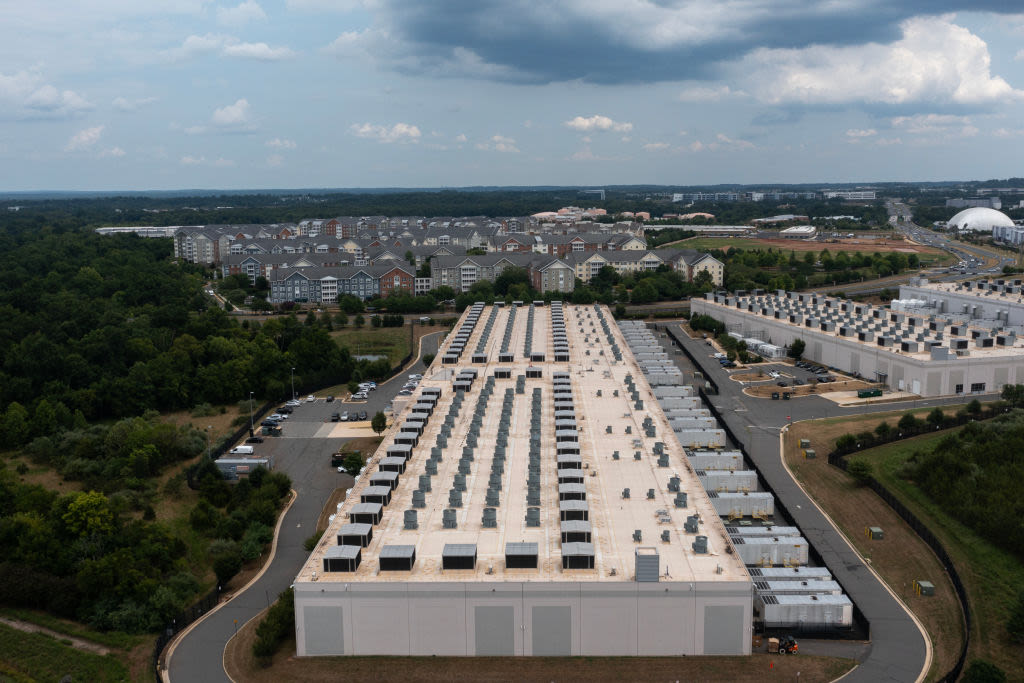
Voters across 18 Ohio municipalities and townships are gearing up to decide the regulatory future of massive data infrastructure projects this November. As technology companies accelerate efforts to construct power-intensive digital infrastructure throughout the region, local residents are turning directly to the ballot box to establish binding restrictions on commercial development.
The surge in electoral initiatives comes after citizen groups finalized their filings ahead of the state’s September 4 deadline for the November 3 general election. Under municipal charter rules across Ohio, registered electors maintain the authority to submit petition initiatives at any point during the calendar year. However, measures filed outside the statutory window of 60 to 120 days before a general election are redirected to standalone special ballots, prompting organized efforts to qualify in time for the fall vote.
The escalating voter pushback unfolds against a broader regional boom that has positioned Ohio as a national hub for digital infrastructure. An April research review conducted by the Pew Research Center revealed that the state currently ranks fourth nationwide in the number of operational data facilities. This prominent standing has attracted aggressive development interest, with tech enterprises and infrastructure developers actively targeting sites to build dozens of additional facilities across both rural and suburban landscapes.
Local tensions have escalated significantly because the vast majority of target areas are confronting immediate building plans. Among the 18 jurisdictions with certified or pending ballot measures this November, 14 have already received formal project applications from commercial data center developers seeking local development approvals.
A major portion of the local measures mirrors a broader regional strategy designed to cap overall energy consumption. Nine separate municipalities—including Conneaut, Defiance, Granville, Oregon, Pataskala, Piqua, Sunbury, Trenton, and Upper Sandusky—are featuring ballot proposals that would prohibit any data centers consuming over 25 megawatts of electricity per month.
These municipal initiatives align with a larger coordinated campaign led by the advocacy organization Conserve Ohio. Although the group was unable to meet an earlier July signature threshold required to place a statewide constitutional amendment on this year's ballot, organizers have redirected their immediate resources toward town-level action while targeting a statewide constitutional vote for 2027.
Representatives from Conserve Ohio emphasized that their grassroots efforts are designed to establish localized municipal boundaries against unchecked development. The group stated that its continued work across multiple communities aims to implement targeted prohibitions while returning regulatory governance directly to local citizens.
In several communities, the conflict over data facilities has ignited broader administrative and political fallout. In Piqua, local organizer Alisha Lange helped lead the local resistance after initially becoming civically active in 2023. Her initial political engagement stemmed from health problems she and neighboring residents experienced following the municipal approval of a local battery plant, a struggle that yielded minimal assistance from elected officials such as U.S. Representative Mike Carey.
Public discontent intensified when Meta unveiled ambitious proposals to erect a massive data campus in Piqua, a facility projected to demand approximately 1,400 megawatts of electric power. The scale of the proposal prompted Lange and fellow residents to collect enough signatures to launch recall proceedings against the city's mayor and two sitting municipal commissioners.
The political mobilization in Piqua expanded further with additional petition filings aimed at reforming local governance. Recent submissions seek to realign the city’s recall signature thresholds with broader state guidelines and formally nullify a municipal electricity deal enacted to supply power to the planned data campus.
Community organizers have observed that the process of collecting voter signatures has transformed into an outlet for shared public anxiety. Rather than encountering apathy, petition circulators noted strong collective engagement among neighbors worried about soaring utility bills, heavy environmental burdens, and the rapid expansion of artificial intelligence infrastructure.
The legal mechanisms and thresholds proposed across Ohio vary significantly from town to town. While some communities in the 25-megawatt coalition have explored total prohibitions via special elections, voters in Urbana are set to consider a stringent charter amendment that outlaws data centers consuming more than 7.5 megawatts of electric power.
Hubbard stands out as the only municipality on the upcoming November ballot presenting an outright, comprehensive ban on all data center construction. The town’s all-encompassing measure represents the strictest approach among the current slate of community initiatives across the state.
In other parts of the state, grassroots campaigns have expanded their focus to address broad industrial expansion. Near Grove City, resident Jen Belt, who resides within two miles of the proposed Project Maple data campus, helped champion an initiative designed to require explicit voter consent for any heavy industrial project proposed within the municipality.
As Election Day approaches, the widespread ballot initiatives across these 18 communities represent a critical juncture for Ohio’s industrial landscape. The upcoming votes will test whether grassroots municipal initiatives can successfully curtail major technological expansions and protect local utility systems from surging industrial power demands.


(0)