
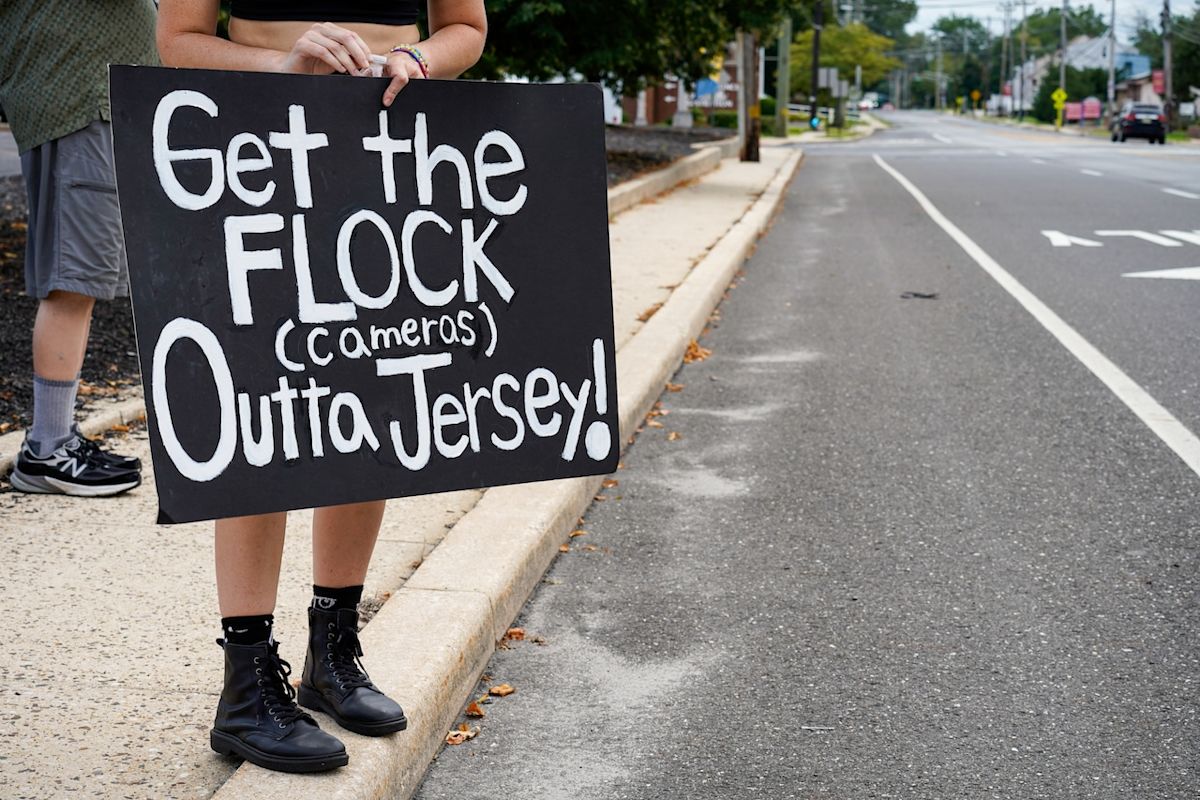
Lawmakers in Trenton are weighing a sweeping proposal that would overhaul how automated license plate readers operate across New Jersey. Introduced on September 14 by Assemblyman David Bailey Jr., D-Salem, Assembly Bill A5483 seeks to rein in the expanding footprint of artificial intelligence-driven vehicle tracking technology by establishing some of the nation's strictest data retention limits and completely outlawing private operation of the devices.
Under the legislative proposal, government agencies and law enforcement departments across the state would be required to permanently and automatically purge the vast majority of license plate scan records within two days. The measure also takes direct aim at the private sector, proposing a comprehensive prohibition against businesses and private citizens operating automated license plate recognition systems.
Automated license plate readers, commonly referred to as ALPRs and often identified by the brand name Flock Safety, utilize high-speed cameras equipped with artificial intelligence software. These systems capture information from passing traffic, recording vehicle license plate numbers alongside specific visual characteristics such as make, model, and color, which are subsequently cataloged into searchable digital repositories.
Assemblyman Bailey expressed profound alarm regarding the trajectory of unregulated mass monitoring and its impact on the constitutional rights of Garden State motorists. In a statement released by Assembly Democrats, Bailey emphasized that New Jerseyans' fundamental right to privacy is being compromised by automated surveillance tools that track the daily travels of ordinary citizens and store that information indefinitely.
While acknowledging that automated camera systems offer legitimate crime-fighting benefits when deployed under controlled circumstances, Bailey argued that the technology must be bound by clear regulatory guardrails. The proposed statute, he noted, is designed to strike an equitable balance between supporting law enforcement operations and preventing artificial intelligence systems from functioning as an unmonitored surveillance dragnet.
The most transformative element of A5483 focuses on the state's retention schedule for captured vehicular data. At present, New Jersey maintains ALPR records for up to three years, an archival window that ranks among the longest in the entire country. Across the nation, a majority of states discard such information within 30 days or less, while certain jurisdictions mandate that non-matching scans be eliminated in as little as five minutes.
Bailey’s proposal would sharply reduce New Jersey's three-year window down to a mandatory 48-hour purge for all standard captures. The legislation outlines narrow exceptions to the two-day deletion mandate, permitting longer data preservation only when records are directly tied to an active criminal investigation, preserved via a formal court order, or associated with vehicles flagged for serious offenses, outstanding theft reports, or unregistered status.
Beyond tightening police data schedules, the bill would prohibit private individuals and commercial businesses from operating plate-scanning camera systems within New Jersey borders, exempting only certified equipment vendors engaged in sales or technical installations. Entities that currently maintain private networks would be compelled to dismantle their hardware and purge all archived files, with the state Attorney General empowered to pursue legal action against noncompliant operators.
Governmental utilization of the camera networks would also face severe statutory restrictions under the new framework. Non-law-enforcement state agencies would only be permitted to install and utilize ALPR devices for narrow logistical purposes, specifically managing state parking facilities, controlling physical entry into secured installations, or collecting electronic road tolls.
For the New Jersey State Police and local municipal police departments, ALPR deployments would be explicitly tied to verified "be on the lookout," or BOLO, alerts. Allowable uses would be confined to identifying stolen automobiles, locating missing persons, flagging unregistered or uninsured vehicles, enforcing inspection compliance, and investigating serious crimes.
Furthermore, the bill establishes strict civil rights safeguards to prevent demographic profiling. Police agencies would be expressly forbidden from strategically positioning ALPR cameras in neighborhoods based on residents' race, religious beliefs, national origin, disability status, or other legally protected characteristics.
Interagency information sharing would also experience significant new hurdles. While State Police officials have historically shared license plate repositories with select federal partners and neighboring state authorities, Bailey's legislation would mandate that any data transfers to out-of-state or federal law enforcement bodies receive prior authorization through an Attorney General-approved warrant.
The bill also imposes rigid accountability standards on commercial suppliers and public agencies alike. Technology vendors would be legally barred from monetizing, selling, or independently distributing captured motorist data. Simultaneously, public agencies utilizing the technology would be subject to mandatory annual auditing procedures and required to publish comprehensive public reports detailing their system operations.
The introduction of the legislation comes as ALPR technology reaches near-universal adoption among New Jersey law enforcement. State audit records indicate that 523 out of roughly 530 police agencies statewide deploy some form of automated license plate reader. Furthermore, records from Flock Safety reveal that at least 82 separate public agencies across all 21 New Jersey counties have contracted directly with the vendor.
This rapid proliferation has sparked noticeable pushback from local communities and privacy advocacy groups. In August, grassroots activists with the organization DeFlock South Jersey staged a public demonstration at a Home Depot in Berlin Township, featuring a costumed mascot named "Flocky" to raise awareness about regional mass surveillance. Similar tensions surfaced in Franklin Township, where a crowded municipal council meeting and a petition with over 800 signatures underscored widespread resident unease over automated monitoring.
Bailey's bill adds to a growing slate of legislative proposals circulating in the state Capitol. State Senator Benjie Wimberly, D-Passaic, previously introduced legislation seeking to lower retention limits to two years alongside criminal penalties for technology misuse, while State Senator Linda Greenstein, D-Middlesex, has advocated banning data transfers for out-of-state reproductive healthcare inquiries. Additional regulatory frameworks have also been outlined across the aisle, including proposals by State Senator Michael Testa, R-Cumberland, signaling building momentum to establish statutory limits on camera surveillance throughout New Jersey.









(0)