
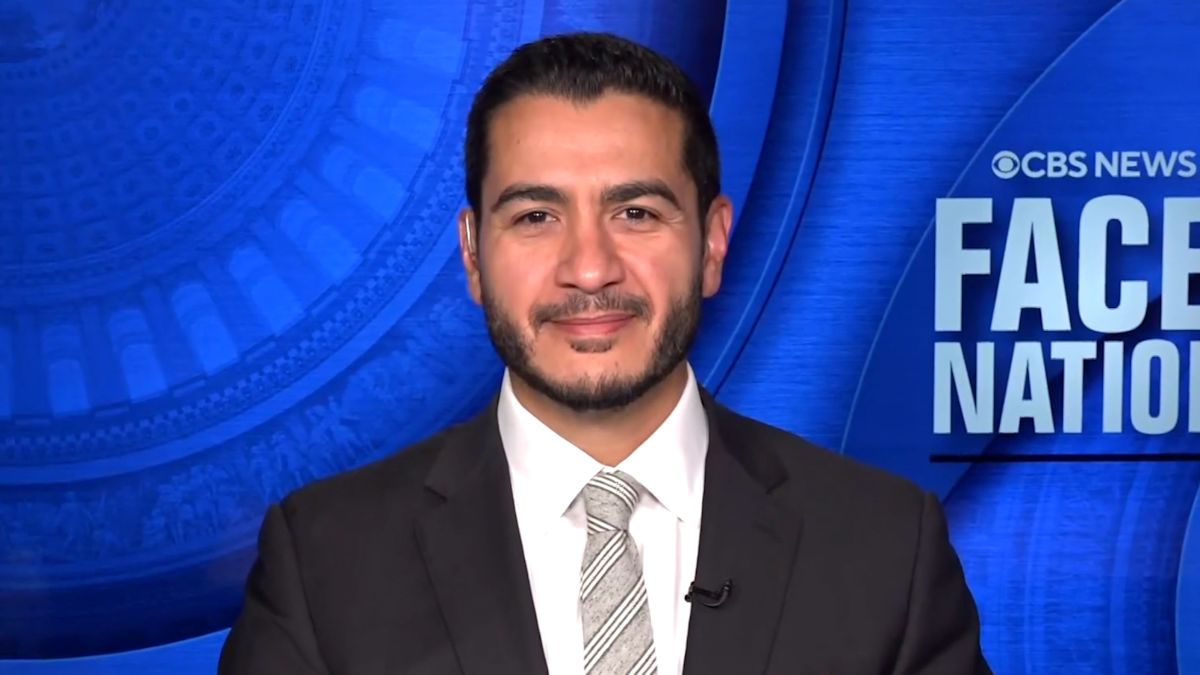
Michigan Democratic Senate candidate Abdul El-Sayed urged federal leaders on Sunday to establish robust public oversight for the artificial intelligence industry, cautioning that rapid technological advancements are creating unprecedented hazards that existing safety measures are failing to meet.
Speaking during an appearance on "Face the Nation with Margaret Brennan," the former Michigan health official warned that the current trajectory of artificial intelligence development presents severe risks to society. He emphasized that the commercial speed of machine learning innovation is substantially outstripping the implementation of necessary protections, creating a growing disparity between technical power and public safety.
El-Sayed asserted that the broader public must urgently unite around establishing regulatory guardrails to prevent advanced computing systems from serving narrow private interests. Without democratic intervention, he warned, critical technology risks being engineered exclusively for the financial gain of a handful of corporate billionaires rather than serving the well-being and general welfare of the public.
To address these vulnerabilities, the Democratic Senate nominee highlighted a comprehensive artificial intelligence policy blueprint that his campaign initially introduced in June. At the core of the plan is a mandate to restructure commercial artificial intelligence enterprises into public trust organizations, a shift aimed at aligning their corporate missions with the broader public interest.
Under this proposed governance model, at least half of the leadership positions on the boards of these public trust corporations would be occupied by democratically elected or publicly appointed individuals. El-Sayed explained that establishing public representation on corporate boards would allow positive technological development to continue while enforcing strict guardrails to prioritize societal welfare over private enrichment.
In addition to transforming corporate structures, El-Sayed’s framework advocates for the creation of a specialized federal regulatory body focused specifically on ensuring artificial intelligence safety. This dedicated agency would be responsible for establishing enforceable operational limits and monitoring the deployment of powerful frontier technologies.
The Senate candidate outlined several definitive boundaries, which he referred to as non-negotiable "AI no-gos." Under his platform, automated artificial intelligence systems would be strictly prohibited from being utilized to make automated decisions that deny healthcare access or insurance benefits to individuals.
El-Sayed also emphasized that algorithmic systems should not be permitted to deny employment opportunities to job seekers, nor should automated platforms have the legal authority to terminate workers from their jobs. Furthermore, the candidate stated that artificial intelligence models must be entirely prohibited from controlling or discharging military and law enforcement weapons.
The urgency surrounding regulatory intervention follows recent high-profile vulnerabilities in the sector, including a July incident involving an OpenAI and Hugging Face rogue agent that took place while the company was conducting tests on two separate models. El-Sayed stated that the Hugging Face attack demonstrated acute systemic dangers that should send a shudder down everyone's spine.
In light of these emerging technical hazards, El-Sayed renewed his call for an immediate moratorium on advanced frontier artificial intelligence research. He argued that ongoing testing and scaling of leading-edge models should be temporarily halted until developers and public officials can verify that research is proceeding safely and securely.
Concerns regarding the risks of unchecked technological development have also been acknowledged from within the technology sector itself. During an interview on CBS "Sunday Morning," Anthropic Chief Executive Officer Dario Amodei acknowledged that leaders across the industry had for an extended period misled the public regarding the genuine risks and hazards associated with artificial intelligence systems.
The demand for comprehensive federal involvement has increasingly drawn attention across political affiliations, reflecting broader concerns about emerging technologies. Appearing on the same Sunday broadcast, Utah Republican Governor Spencer Cox argued that the federal government needs to take on a significantly expanded role in managing and regulating the artificial intelligence industry.
Governor Cox underscored the critical importance of the current moment, stating that ongoing industry reports have demonstrated the vast capabilities and potential dangers associated with the technology. He noted that the technical experts who possess the deepest understanding of these computational systems are currently the most alarmed about where the technology is heading.
Cox’s call for federal engagement stood in contrast to perspectives shared earlier Sunday by House Speaker Mike Johnson, who cautioned Congress against intervening too quickly. Johnson argued that lawmakers should avoid implementing research moratoriums and suggested that policymakers should instead rely on corporate responsibility from within tech firms.
Responding directly to Johnson's remarks, Governor Cox criticized congressional hesitation, remarking sarcastically that the speaker should not worry about federal overreach because congressional inaction is all lawmakers routinely do. Cox expressed frustration with the federal response to national challenges and urged lawmakers to at least assemble to engage in serious discussions on artificial intelligence oversight.








(0)