
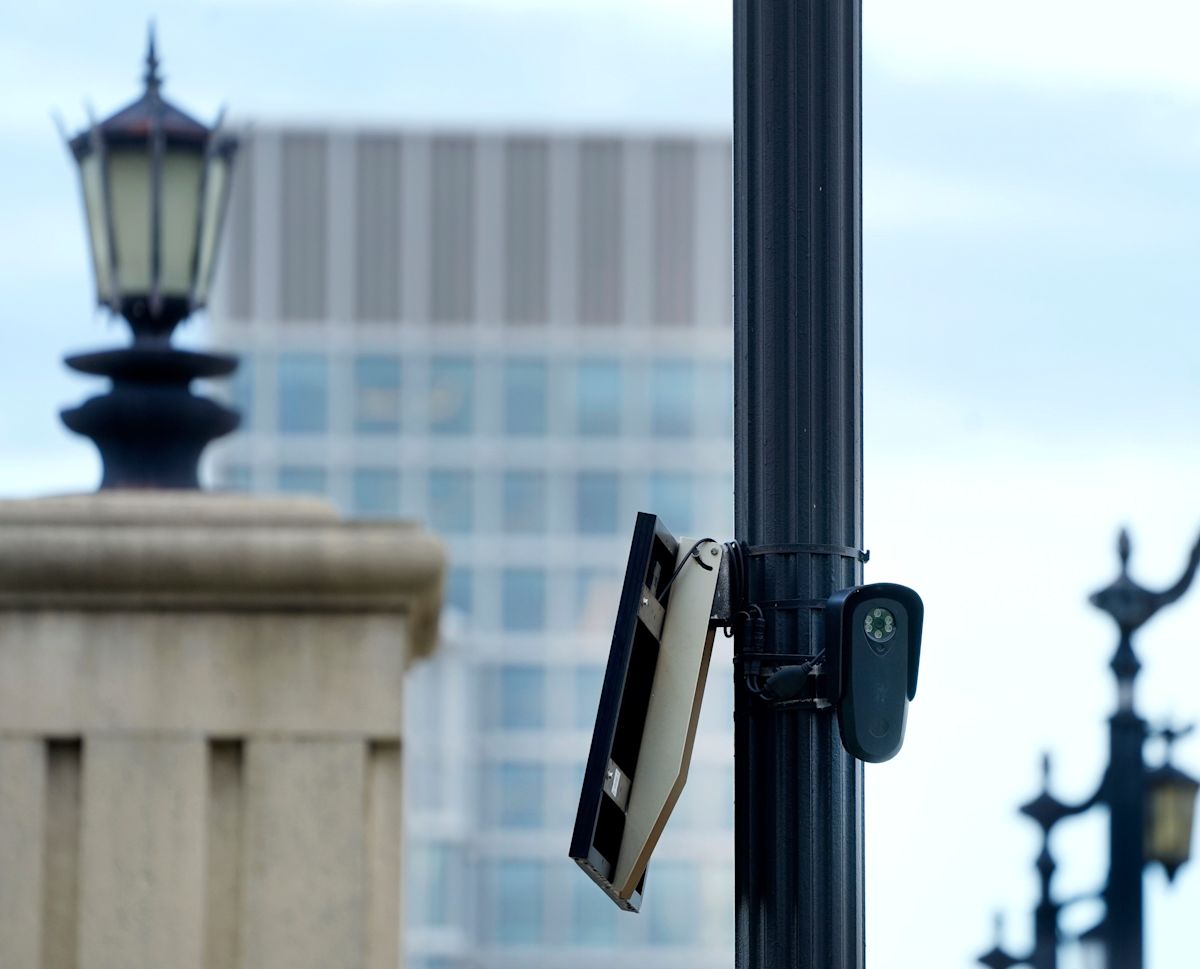
A recent regulatory directive from the Florida Department of Transportation has forced the removal of dozens of automated license plate readers across Alachua County, bringing renewed scrutiny to the balance between modern law enforcement tools and civilian privacy rights. The state’s sudden permit revocations have energized local calls for formal community oversight and clear operational standards governing automated surveillance technology.
The shift follows an Aug. 31 decision in which the Florida Department of Transportation abruptly revoked its general use permits for automated license plate readers operating within state highway rights-of-way. Under the state agency's mandate, municipal and county law enforcement departments across Florida were granted a strict 30-day window to dismantle and remove any camera systems situated within those designated transportation corridors.
In Alachua County, Sheriff Chad Scott quickly conducted an internal review and determined that 27 automated license plate readers fell directly under the state agency's removal criteria. While those specific roadside cameras are slated for deactivation and dismantling, the ruling leaves the rest of the local surveillance network untouched, as automated plate readers positioned outside state-controlled highway rights-of-way remain fully operational.
The partial removal of the surveillance network arrives amid growing grassroots pressure from local civic researchers and residents. Sam Cornell, an independent public-records researcher and Gainesville surgical coordinator specializing in organ recovery, had recently addressed the Alachua County Commission to urge elected leaders to establish strict, standardized policies for the county's automated license plate recognition programs.
During that public address, Cornell emphasized that his objective was not to demand the total elimination of automated readers, but rather to establish transparent operating boundaries. The proposed guardrails include shortening the duration of data retention, mandating thorough independent audits, maintaining open transparency regarding which entities can access collected information, and providing an itemized accounting of overall public costs.
The call for structural reform resonated with local leadership, as all five members of the Alachua County Commission reached a consensus that the county's expanding automated plate reader framework warranted a formal, comprehensive review. However, the regulatory action initiated by state officials in Tallahassee rapidly overtook local discussions, accelerating debates on surveillance management before the commission could act.
Cornell had spent the preceding summer examining local government records through Florida's public-records statutes to evaluate compliance within the automated license plate reader network. A core component of his initial inquiry had been to determine whether proper transportation department permits were on file for active camera placements, a query that was decisively resolved when state officials chose to cancel all general use permits in state rights-of-way.
Law enforcement officials maintain that the camera networks serve an indispensable role in maintaining community safety and assisting criminal investigations. Sheriff Scott has publicly noted that automated license plate readers have provided critical intelligence that directly enabled deputies to solve complex homicides, locate missing individuals, apprehend suspects in armed robberies, and recover stolen motor vehicles.
The investigative utility of the technology is further supported by case documentation from neighboring jurisdictions. In response to research inquiries, Lake County officials shared two dozen investigative summaries demonstrating how automated plate data consistently aided law enforcement officers in tracking criminal suspects and resolving active cases across their region.
Despite acknowledging the clear benefits of the technology for criminal investigations, local authorities have also recognized the valid privacy concerns shared by civil liberties advocates. Sheriff Scott highlighted that the overwhelming majority of vehicles captured by license plate readers belong to ordinary community members commuting to work or driving children to school—individuals who are not criminal suspects and should not be treated as such.
According to both law enforcement leadership and civil advocates, the central policy dilemma surrounding automated surveillance hinges on fundamental data governance questions: defining precisely what data is collected, how long records are stored, who is permitted to query the database, and what legal standards establish a legitimate search.
Civic observers point out that relying on state highway boundaries does not resolve these broader privacy questions. The decision by state transportation officials to restrict camera placements to non-highway zones represents a purely jurisdictional boundary rather than a comprehensive, privacy-focused public policy, leaving unresolved concerns about how long personal travel data remains accessible.
The sequence of events in Alachua County illustrates a recurring challenge in public administration, where advanced investigative technologies are widely procured and deployed long before comprehensive public consent and regulatory frameworks are established. The sudden regulatory intervention from Tallahassee has now forced local communities to engage in the oversight conversations that should have preceded the technology's initial rollout.
Advocates have noted that constructive policy development relies on institutional transparency. The Alachua County Sheriff's Office facilitated Cornell's research by fulfilling extensive public records requests within roughly a week at no charge, fostering a collaborative environment where policy debates can be grounded in verifiable administrative documentation rather than adversarial disputes.
As community members prepare for ongoing discussions with representatives from the Alachua County Sheriff's Office, local stakeholders aim to establish formal operational guidelines through open dialogue. Proponents of surveillance reform argue that communities can fully support law enforcement operations while simultaneously requiring that powerful automated monitoring systems remain strictly governed by rules developed with direct public participation.





(0)