
Amid escalating living costs and growing economic strain across the United States, community food distribution centers are witnessing steady increases in attendance. Yet, the ground-level reality observed at these aid hubs sharply contrasts with recent dismissive characterizations by prominent technology figures, who have frequently labeled recipients of federal support and charitable assistance as a drain on societal resources.
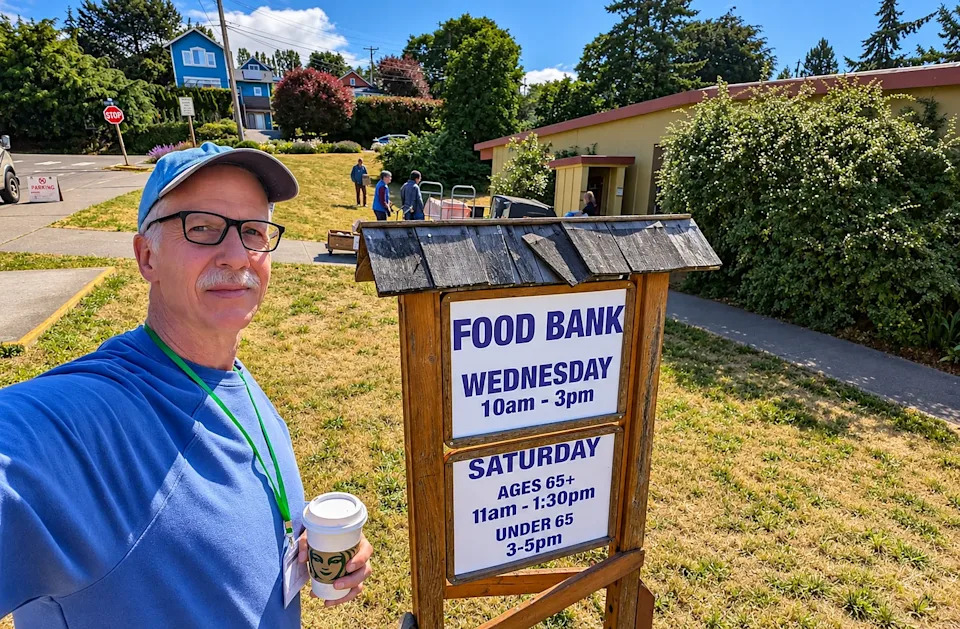
In Port Townsend, Washington, operations at a local food bank offer a direct window into the demographic shifts and personal struggles defining modern food insecurity. Over months of regular operations, volunteer staff have noted that surging consumer prices are steadily driving larger crowds through the pantry doors, spanning from large families and fixed-income retirees to individuals coping with disabilities and the working poor.
Contrary to prevailing stereotypes that depict social safety net users as opportunistic or overly reliant on aid, frontline workers report an overwhelming pattern of restraint and empathy among clients. In one illustrative instance, an elderly, disabled man named Cal, whose visible frailty demonstrated severe hardship, initially refused a jar of peanut butter so that it could instead be preserved for households with young children, accepting the food only after volunteers assured him that adequate inventory remained in storage.
Such behavior appears to be the standard rather than the exception. Across interactions with more than a thousand individuals over a six-month period, volunteers documented only two instances where a client requested an unreasonable volume of supplies. Frontline staff report that the vast majority of patrons consistently express concern about taking more than their fair share, routinely checking with distributors to ensure sufficient food remains for others in need.
Community cooperation also extends beyond personal consumption, as many clients actively support neighbors who are unable to visit distribution sites. Examples include caregivers who gather groceries for disabled acquaintances or individuals preparing shared meals for extended relatives who have not yet registered for official assistance. Furthermore, a considerable portion of the volunteer workforce at such facilities is composed of current or former clients who understand the necessity of the service firsthand.
The data gathered on the ground also dismantles the misconception that food bank recipients do not participate in the labor force. Volunteers frequently distribute provisions to individuals employed in service sector roles, such as fast-food employees and exhausted healthcare aides arriving directly from overnight shifts at nursing homes to secure meals for their dependents, underscoring how low-wage employment often fails to meet basic cost-of-living requirements.
Sustaining these relief operations demands intensive physical and organizational effort, carried out primarily by older, retired community members. The daily workload involves heavy logistics, including unloading delivery vehicles laden with expiring supermarket inventory, farm surpluses, and shipments from regional redistribution hubs.
Beyond physical distribution, volunteers handle client registration, inventory ordering, produce cleaning and preparation, shelf restocking, and the disposal of massive amounts of packaging material. This extensive infrastructure operates continuously to absorb the shockwaves of an increasingly unaffordable economy.
The dedication seen in grassroots hunger relief stands in stark opposition to recent public commentary from high-profile tech executives. Billionaire Elon Musk recently amplified a controversial characterization that branded Americans who depend on federal assistance programs as members of a "parasite class," a label that community workers argue ignores both the dignity and the necessity of those seeking nutritional support.
While other wealthy figures have offered differing viewpoints—such as Amazon founder Jeff Bezos suggesting that lower-income earners should be exempt from federal income taxes, or Meta chief Mark Zuckerberg voicing sympathy for progressive critiques of extreme wealth concentration—their proposed remedies often remain distant from daily socioeconomic realities.
Tech leaders like Musk and Zuckerberg have frequently pointed to artificial intelligence as a primary mechanism to elevate living standards and eliminate global poverty. However, practical policy developments have moved in a different direction. Initiatives associated with Musk's Department of Government Efficiency (DOGE) framework have resulted in an estimated $1 billion reduction in funding for the U.S. Department of Agriculture, directly cutting resources that enable local food pantries to procure goods from regional agricultural producers.
At the same time, economic scholars and analysts have voiced skepticism regarding claims that automation will naturally eradicate poverty. Many experts warn that without robust regulatory oversight, artificial intelligence is far more likely to exacerbate existing wealth disparities and further disadvantage vulnerable working-class populations.
Broader debates over economic fairness are further compounded by tax policy disputes involving the ultra-wealthy. While figures like venture capitalist Peter Thiel frequently voice objections regarding high tax obligations, investigative analyses from organizations such as ProPublica show that when factoring in unrealized stock gains, billionaires typically pay a true tax rate between three and ten percent, with the nation's wealthiest 25 individuals paying roughly 3.4 percent.
As national discussions surrounding welfare, taxation, and technological advancement persist, the experiences of local food banks underscore a profound disconnect between corporate rhetoric and community realities. For the volunteers and families navigating the daily pressures of food insecurity, human solidarity remains an essential counterweight to policy cuts and detached economic theories.






(0)