
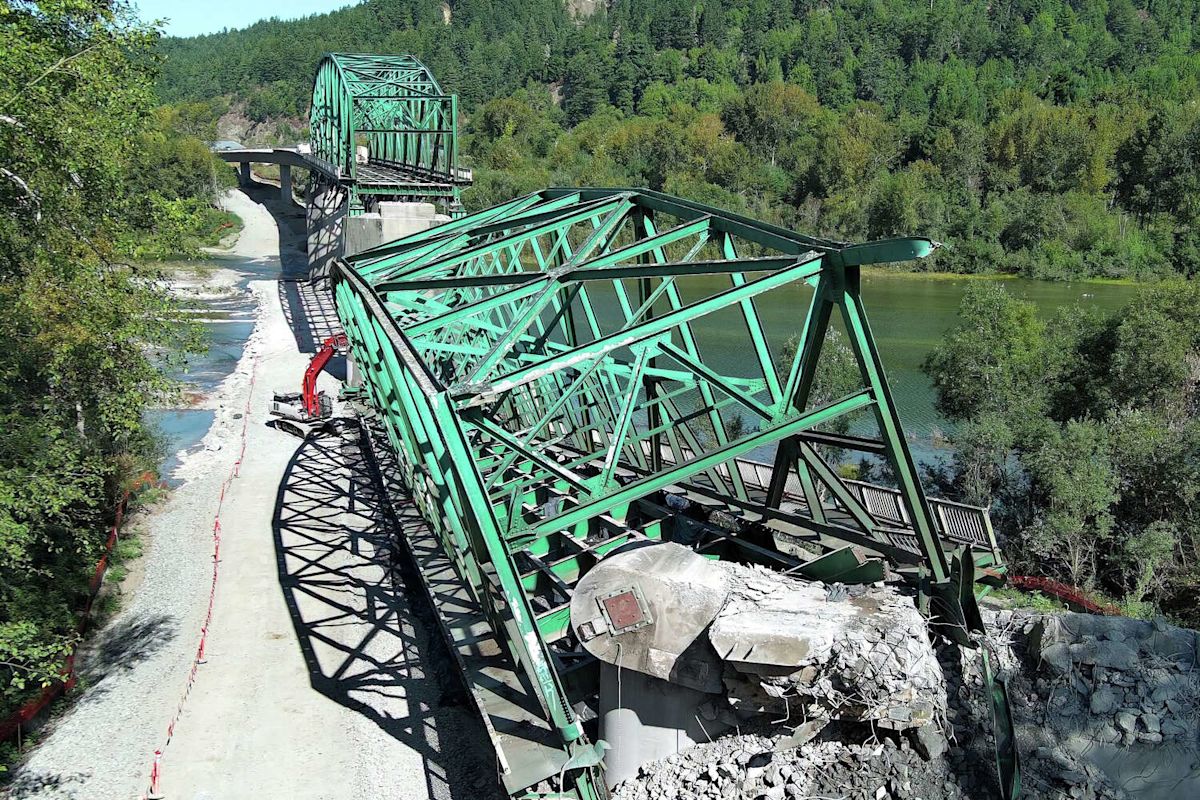
Motorists traveling along California’s North Coast are preparing for extended transit disruptions as state transportation authorities launch a major, multi-year seismic overhaul of the Eel River Bridge along U.S. Highway 101. The extensive engineering project is designed to safeguard the vital coastal corridor against major seismic activity, bringing an aging piece of regional infrastructure into alignment with rigorous modern earthquake safety requirements.
The bridge is situated in Humboldt County, located directly north of the community of Rio Dell, where Highway 101 serves as a critical transportation lifeline for local residents, commercial freight carriers, and regional travelers alike. The California Department of Transportation, widely known as Caltrans, has warned that the project is expected to create a persistent travel choke point along the highway through at least 2030.
Physical work at the site marked a significant milestone when demolition crews successfully detached and removed the very first section of the historic Eel River Bridge. That structural removal signaled the formal start of the bridge's demolition process, paving the way for a substantial replacement structure to be built across the river channel.
According to project timelines outlined by Caltrans officials, demolition activities are scheduled to advance rapidly during the initial stages of work. The state transportation agency confirmed in a public update that three primary spans of the bridge, along with their underlying foundational support structures, are slated to be brought down before the end of the current month.
In addition to dismantling the elevated bridge segments, construction crews are tasked with managing the temporary earthworks placed in the riverway. Caltrans indicated that a temporary rock berm utilized to facilitate the initial demolition work is scheduled to be completely cleared from the active riverbed by the middle of October.
The structural overhaul will not involve the complete destruction of the entire existing crossing. Based on environmental documentation filed under the California Environmental Quality Act, engineers have adopted a hybrid structural strategy. While several vulnerable spans are being torn down and rebuilt from scratch, the remaining four segments of the bridge will undergo specialized seismic retrofitting rather than total replacement, allowing Caltrans to fortify the existing framework.
Seasonal environmental limitations along the river have dictated a strict schedule for the upcoming construction phases. Caltrans stated that heavy construction activity will transition outside the active river channel throughout the winter season. Once dry weather conditions return next summer, crews will re-enter the site to begin driving and installing the deep foundation piles required for the new bridge structure.
With the northbound bridge structure taken completely out of commission for demolition and reconstruction, transportation planners have implemented a dedicated traffic realignment. The Highway 101 Eel River crossing benefits from having a parallel bridge on site, allowing Caltrans to shift both northbound and southbound traffic lanes onto that single surviving structure.
While this dual-direction shift prevents a full closure of Highway 101, drivers should anticipate notable impacts on their daily commutes. Transportation officials noted that motorists will encounter reduced speed limits, lane disruptions, and the persistent presence of heavy construction machinery in the work zone, all of which are expected to slow down traffic significantly across the Eel River crossing.
The Eel River Bridge overhaul represents one piece of an extensive, statewide transportation safety initiative. According to Caltrans documentation, the span is one of more than 2,000 bridges throughout California that the agency must either repair or replace in order to guarantee they possess adequate structural strength to survive a severe earthquake without catastrophic failure.
Securing the necessary capital for the massive Humboldt County undertaking was finalized late this summer. In August, the California Transportation Commission officially voted to approve an overall funding allocation of $69.8 million to support the multi-year demolition, retrofitting, and construction operations needed to complete the Eel River crossing.
The funding package is composed of both federal and state infrastructure investments. The vast majority of the capital—nearly $62 million—originates from the federal Infrastructure Investment and Jobs Act passed in 2021. The remaining funding required to reach the project total is being provided through California's Road Repair and Accountability Act of 2017.
The visible dismantling of the long-standing structure has generated notable reflection and conversation among Humboldt County residents. Taking to social media platforms following the start of demolition, local community members shared memories of the crossing. Resident Kathi Edwards described the structure as a charming bridge, observing that while the good old days are over, the community should remain grateful for modern, earthquake-safe bridges.
With active construction expected to continue across multiple phases until 2030, the Eel River project highlights the ongoing trade-offs between daily commuting convenience and long-term public safety. As Caltrans progresses through demolition, retrofitting, and rebuilding, the North Coast corridor will gradually transition toward an updated crossing engineered to withstand the region's formidable seismic threats.





(0)