
A coalition of local lawmakers, law enforcement agencies, and business representatives is intensifying pressure on California Governor Gavin Newsom to enact new legislation aimed at dismantling criminal rings dedicated to metal and copper theft. The push comes amid a surge in infrastructure vandalism that has knocked out critical communication networks and plunged neighborhoods into darkness across Los Angeles and other cities throughout the state.
At the center of the legislative effort is Assembly Bill 1941, a measure crafted to give law enforcement and prosecutors significantly stronger mechanisms to combat organized operations that target public utilities. Backers of the bill argue that systemic theft of public infrastructure has reached crisis levels, posing severe threats to public safety and demanding a coordinated statutory response.
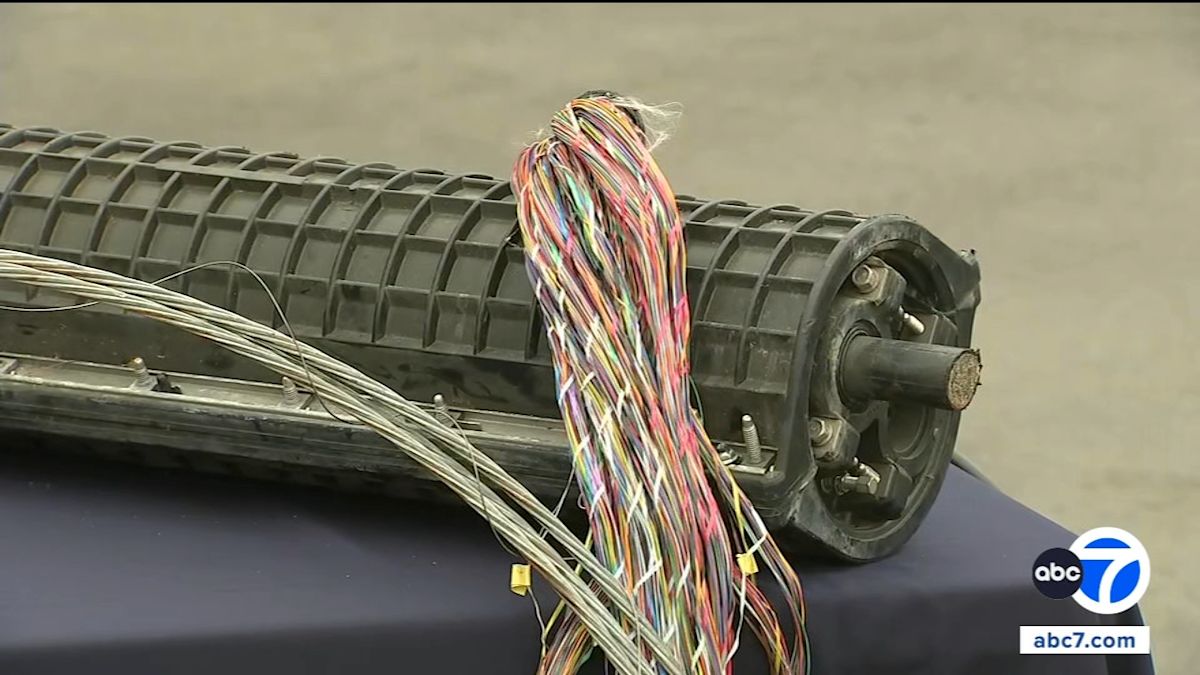
The staggering scale of the destruction is underscored by newly disclosed utility records from the Los Angeles Department of Water and Power. According to investigative findings, thieves have stripped more than 27,000 feet of municipal communications cable from LADWP facilities and conduits over the course of the past year alone.
To put the magnitude of the loss into perspective, the stolen wiring spans approximately five miles in total length. If oriented vertically, the missing utility lines would equal the cruising altitude of a typical commercial passenger jet. Horizontally, the continuous length of stolen wire is equivalent to roughly 90 American football fields or approximately 165 Olympic-sized swimming pools arranged end to end.
The practical impact of these continuous thefts extends far beyond raw measurements. When criminal rings extract underground and overhead wiring, the damage frequently disrupts vital telephone and communications services for nearby residents and commercial enterprises. Furthermore, the stripping of essential electrical components routinely knocks out municipal streetlights, leaving high-traffic roadways, public crossings, and neighborhood corridors in complete darkness.
To directly address the coordinated nature of these crimes, AB 1941 seeks to establish a distinct criminal offense officially classified as "organized metal theft." Proponents of the legislation emphasize that current statutory frameworks often fail to reflect the premeditated, multi-party operations required to pull off large-scale metal stripping.
Under the provisions of the proposed law, individuals who team up with others to either illicitly extract public metal infrastructure or purchase stolen metal goods could face up to one year of imprisonment. By including both the physical perpetrators and the illicit secondary buyers within the scope of the penalty, the bill aims to disrupt the financial incentives driving the entire black-market supply chain.
Assembly Member Mark González, who represents portions of Los Angeles and authored the legislative measure, formally rallied support for the bill during a press conference on Monday. Standing alongside community leaders and public safety advocates, González emphasized that current enforcement remedies must be upgraded to deter increasingly sophisticated theft rings.
During his remarks, González delivered a stern warning to those exploiting public utilities for illicit profit. He stressed that California's critical infrastructure is not available for theft, maintaining that the state now has a direct legislative opportunity to arm prosecutors with the specific legal authority needed to hold organized thieves accountable while securing the public systems essential to community safety.
The location selected for the press conference was deeply symbolic: the city's iconic 6th Street Bridge. The prominent Los Angeles structure has served as a frequent and visible target for metal thieves, who have repeatedly ripped out its internal streetlight wiring and electrical conduits.
As a result of these relentless incursions, the landmark viaduct has regularly been plunged into total darkness at night, creating hazardous conditions for motorists, cyclists, and pedestrians navigating the span. The destruction has also placed an enormous financial strain on the public sector, with taxpayers spending an estimated $11 million solely to replace and repair stolen cable along the 6th Street Bridge.
Municipal leaders emphasize that the challenges facing the 6th Street Bridge reflect a widespread pattern observed across numerous California jurisdictions. Municipalities throughout the state have reported similar recurring expenditures, as local agencies are continually forced to redirect finite public funds toward emergency wiring repairs and replacement hardware.
By establishing the offense of organized metal theft, proponents hope to deter illicit scrap operations that knowingly receive and process pilfered public property. Officials argue that closing regulatory and penal loopholes on the purchasing side is vital to cutting off the cash flow that motivates high-risk infrastructure theft in the first place.
Supporters of AB 1941 contend that preserving community connectivity and ensuring the reliable operation of public lighting are fundamental government responsibilities that require aggressive legislative backing. They point out that without enhanced statutory consequences, the recurring cycle of theft, repair, and re-theft will continue to deplete public coffers and compromise neighborhood safety.
With the legislative process concluded in the state legislature, the fate of AB 1941 now rests entirely with Governor Newsom. Municipal officials, law enforcement agencies, and community stakeholders across California are awaiting the governor's final executive action on the desk-pending measure.





(0)