
As part of its landmark centennial celebration, the Witte Museum has launched a major culinary exhibition exploring the rich, diverse flavors and cultural history of the Lone Star State. Titled "Gather 'Round the Table: Texas Food Traditions," the extensive presentation offers museumgoers a comprehensive look into what Texans cook, eat, and celebrate, blending historical relics with vibrant, contemporary cultural icons.
Scheduled to remain on public view through February 7, 2027, the expansive exhibition serves as a centerpiece for the institution's 100th anniversary. Rather than simply cataloging recipes, the showcase examines the historical origins, regional variations, and communal significance of Texas food, presenting complex cultural stories in an approachable, engaging manner for visitors of all ages.
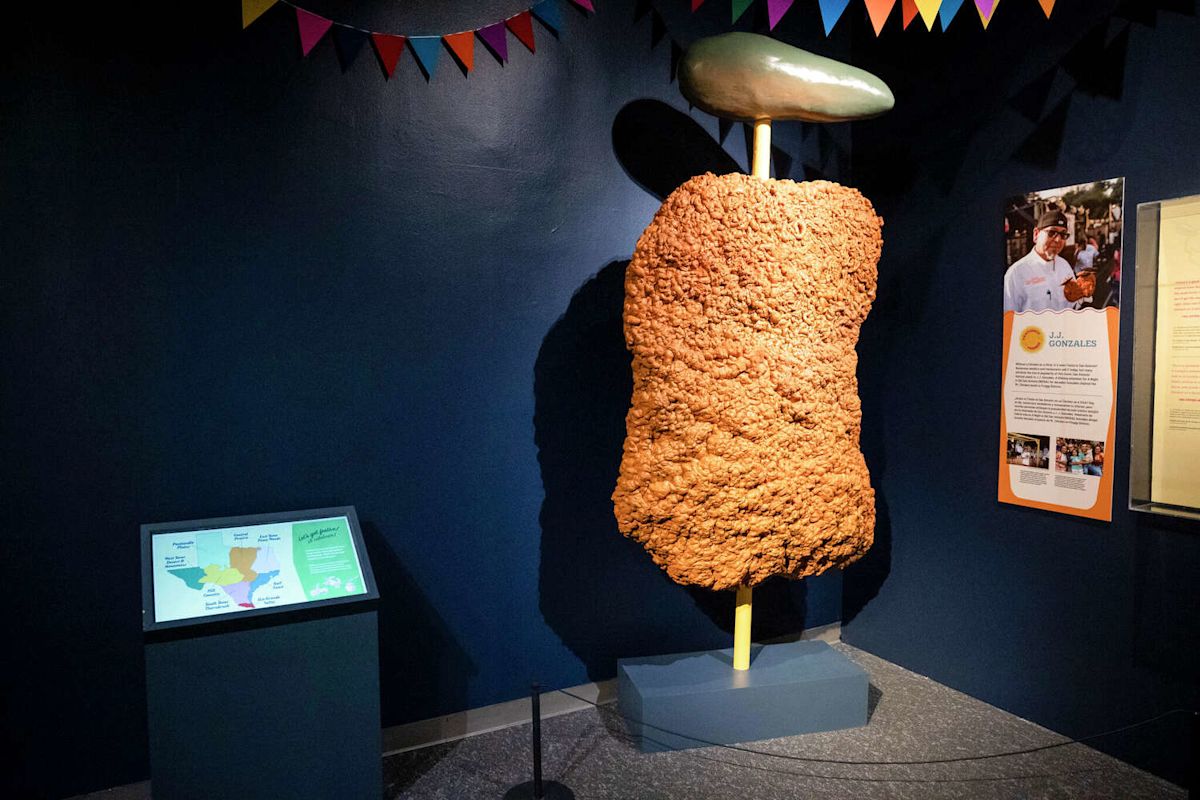
Among the most striking installations welcoming attendees is an oversized, 10-foot-tall sculpture of a beloved Texas festival staple: chicken on a stick. Crafted with a thick golden-brown exterior and topped with a plump jalapeño skewered onto a vivid yellow rod, the massive visual centerpiece looks realistic enough to satisfy a crowd, though it is entirely sculptural rather than edible.
The towering artwork was conceptualized and built by Marcos Medellin, the director of exhibitions at the Witte Museum. Despite its polished and mouthwatering appearance, the sculpture was engineered from everyday workshop materials, utilizing a framework of spare shop wood, chicken wire, insulating foam, and a central PVC pipe to bring the towering festival treat to life.
The inclusion of the towering poultry skewer was practically non-negotiable when curators began assembling the section dedicated to local festivals and public gatherings. According to Nalleli Guillen, the museum's vice president of interpretation and curator of history, community expectations made the dish an essential inclusion, noting that organizers jokingly feared being run out of town if such an iconic celebration food were left out of the narrative.
Beyond festival favorites, "Gather 'Round the Table" delves into deep-seated culinary debates that have engaged Texas diners and home cooks for generations. The exhibition thoughtfully explores enduring regional rivalries and personal preferences, analyzing classic kitchen face-offs such as the divide between flour and corn tortillas, as well as the spirited competition between salsa and guacamole.
To complement its visual displays, the exhibition incorporates multi-sensory components designed to bring culinary history alive. Visitors are invited to engage their sense of smell through an interactive spice station, which allows patrons to experience the distinct aromas of eight different seasoning varieties commonly found across Texas cooking traditions.
Museum leadership has emphasized that the centennial exhibition represents a proud demonstration of the institution's internal creative and curatorial capabilities. Michelle Everidge, president and chief executive officer of the Witte Museum, praised the project as a prime example of the staff's talent, noting that producing an in-house exhibition on such an ambitious scale with authentic artifacts makes it an ideal tribute for the museum's 100th birthday.
In addition to modern festival tributes and culinary debates, the exhibition anchors itself deeply in the museum's foundational history through the inclusion of rare natural science artifacts. A key highlight is an early 20th-century shadow box that demonstrates the extensive agricultural and natural heritage of Texas pecans.
Created by naturalist H.P. Attwater in the early 1900s, the antique shadow box displays specimens from 50 distinct pecan varieties, arranged neatly in sets of three. The exhibit reveals the surprising ecological diversity of the nut, educating visitors on the fact that more than 1,000 distinct types of pecans exist in nature.
Underneath Attwater's carefully preserved specimens, aged typewritten labels classify a wide range of physical traits, distinguishing slender May Russells and plump sweetmeats from delicate-looking Mexican Papershells. Beyond serving as an homage to the beloved Texas pecan pie, the display holds immense historical importance as a cornerstone artifact from the museum's earliest days.
The pecan display forms part of the Attwater Collection of Natural History, which marked the very first major acquisition made by the Witte Museum. The collection was originally purchased for $5,000 by Ellen Schulz Quillin, a botanist and schoolteacher who founded the institution. To finance the acquisition, Quillin relied on grassroots fundraising driven by school students who contributed nickels and dimes.
Items from Attwater's natural history collection were among the inaugural artifacts presented when the institution officially opened its doors on October 8, 1926. Originally christened the Witte Memorial Museum, the cultural venue later shortened its name in 1984 by dropping the word "Memorial," continuing to expand its regional mission over the ensuing decades.
By linking century-old foundational artifacts with modern culinary art and interactive sensory stations, "Gather 'Round the Table" encapsulates a century of museum history while honoring the state's ongoing gastronomic evolution. The exhibition continues to welcome visitors through early 2027, inviting communities across Texas to reflect on the communal heritage shared over generations at the dining table.




(0)