
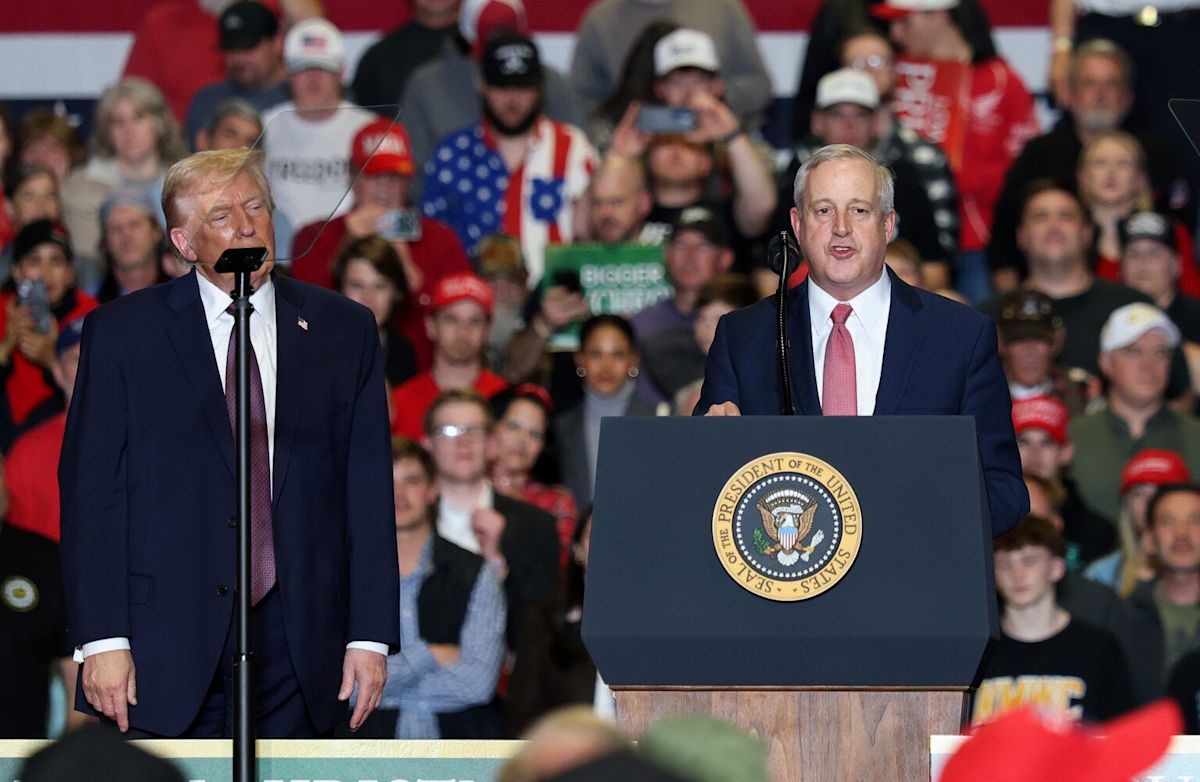
President Donald Trump is scheduled to travel to North Carolina on Wednesday to headline a campaign rally alongside Republican U.S. Senate nominee Michael Whatley. The high-profile appearance in Gastonia underscores growing concerns within the national Republican Party regarding its ability to retain the crucial battleground seat in the upcoming midterm elections.
The contest represents one of the most closely watched Senate races in the country, as the seat is being vacated by retiring Republican U.S. Sen. Thom Tillis. The Cook Political Report has rated the North Carolina matchup as "lean Democrat," signaling an uphill battle for Republicans attempting to maintain their footing in the purple state.
Whatley, who previously served as chairman of both the Republican National Committee and the North Carolina Republican Party, is currently trailing his opponent, Democratic former Gov. Roy Cooper, across recent polling metrics and campaign fundraising totals. The gap has intensified the urgency for national figures to intervene and energize the party faithful.
Taking to social media ahead of the event, Whatley expressed enthusiasm about welcoming the president to his home area of Gastonia. He emphasized the national stakes of the contest, stating that Trump requires a steadfast ally in the Senate and asserting that North Carolina needs a dedicated fighter to secure a victory on November 3.
The broader fight for the upper chamber remains tightly contested. Currently, Republicans hold a 53-seat majority in the Senate, compared to 45 seats held by Democrats and two seats occupied by independent senators who caucus with the Democratic Party. Any shift in North Carolina could significantly influence which party controls the chamber.
Beyond North Carolina, the Republican Party is managing a broad and demanding electoral map. GOP leaders find themselves actively defending competitive open seats in traditionally conservative territory like Iowa and Texas, while also directing resources to protect incumbent senators facing challenges in Alaska, Maine, and Ohio.
At the same time, Republicans are attempting to expand their footprint by targeting potential pick-up opportunities in battlegrounds such as Michigan, New Hampshire, and Georgia. This wide array of competitive races has placed significant pressure on party strategists to manage their campaign finances carefully.
In North Carolina, the financial demands are particularly steep due to the presence of expensive advertising markets in Charlotte and the Raleigh-Durham metropolitan area. Because both political parties may be forced to spend far more capital than initially anticipated, leaders may face difficult decisions regarding how to triage their campaign funds.
Eric Heberlig, a political science professor at the University of North Carolina at Charlotte, noted that the GOP’s national math allows for some flexibility. He observed that Republicans could potentially retain their Senate majority even without winning North Carolina, which factors heavily into calculations about where best to mitigate potential losses.
Nevertheless, Heberlig emphasized that a personal visit from the president highlights the elevated status of the North Carolina race on the national stage. While Trump’s approval rating in the state currently hovers around 35%—making it improbable that his visit will sway undecided or moderate swing voters—the rally serves an alternate strategic purpose.
According to Heberlig, the primary goal of the presidential appearance is base mobilization. The rally is designed to activate core Republican voters, particularly low-propensity voters who may be less familiar with Whatley’s candidacy and might otherwise sit out a midterm election cycle.
The strategic imperative for the GOP, Heberlig explained, is ensuring that voters who previously cast ballots for Trump, Tillis, and Sen. Ted Budd turn out once again to support the Republican ticket. Maintaining that existing conservative coalition is seen as vital to Whatley’s chances.
Additionally, Trump’s presence could generate spillover enthusiasm in western North Carolina’s 11th Congressional District following local controversies. In that race, the state Republican Party selected state Rep. Jennifer Balkcom to replace former Rep. Edwards on the ballot. Balkcom faces Democratic challenger Jamie Ager, a fourth-generation farmer with family political ties, in a district rated as "lean Republican."
Despite Whatley’s organizational ties, historical trends present a unique dynamic for the Senate race. While North Carolina voters have frequently supported Democrats in state-level executive races, the state has not elected a Democratic U.S. senator or backed a Democratic presidential candidate since 2008, when Barack Obama won the state.
However, Cooper brings unusually strong credentials to the Democratic ticket as the party's most prominent statewide candidate in decades. Having served two terms as governor and four terms as state attorney general—a 16-year legal tenure that marks the longest in state history—Cooper maintains extensive statewide visibility. He launched his general election campaign in Raleigh by focusing heavily on economic proposals to lower food and grocery costs.
Heberlig pointed out that Cooper's established track record provides him with a substantial advantage in name recognition and personal popularity. In response to the upcoming Gastonia rally, North Carolina Democratic Party Chair Anderson Clayton argued that the presidential visit, combined with Whatley's recent speaking appearance at the national midterm convention in Dallas, demonstrates that Republicans are deeply worried about their standing in the state.





(0)