
During the early 1960s, American home entertaining operated under the prevailing belief that the future of cooking had officially arrived. Across the country, hostesses felt an unspoken expectation to display tangible proof of this modern era directly to their dinner guests. Kitchens were transformed into showcases of mid-century progress, relying on new gadgets, commercial food packaging, and shelf-stable ingredients that promised efficiency without sacrificing flair.
Evidence of this culinary modernization was visible throughout the dining room. Entertaining setups routinely featured tabletop chafing dishes flickering over open flames on sideboards, alongside wire baskets filled with frozen puff pastry shells retrieved from supermarket freezers. Hostesses regularly served canned crab and clams harvested from oceans far from landlocked living rooms, preparing meals using branded recipes printed directly onto the side panels of breakfast cereal boxes.
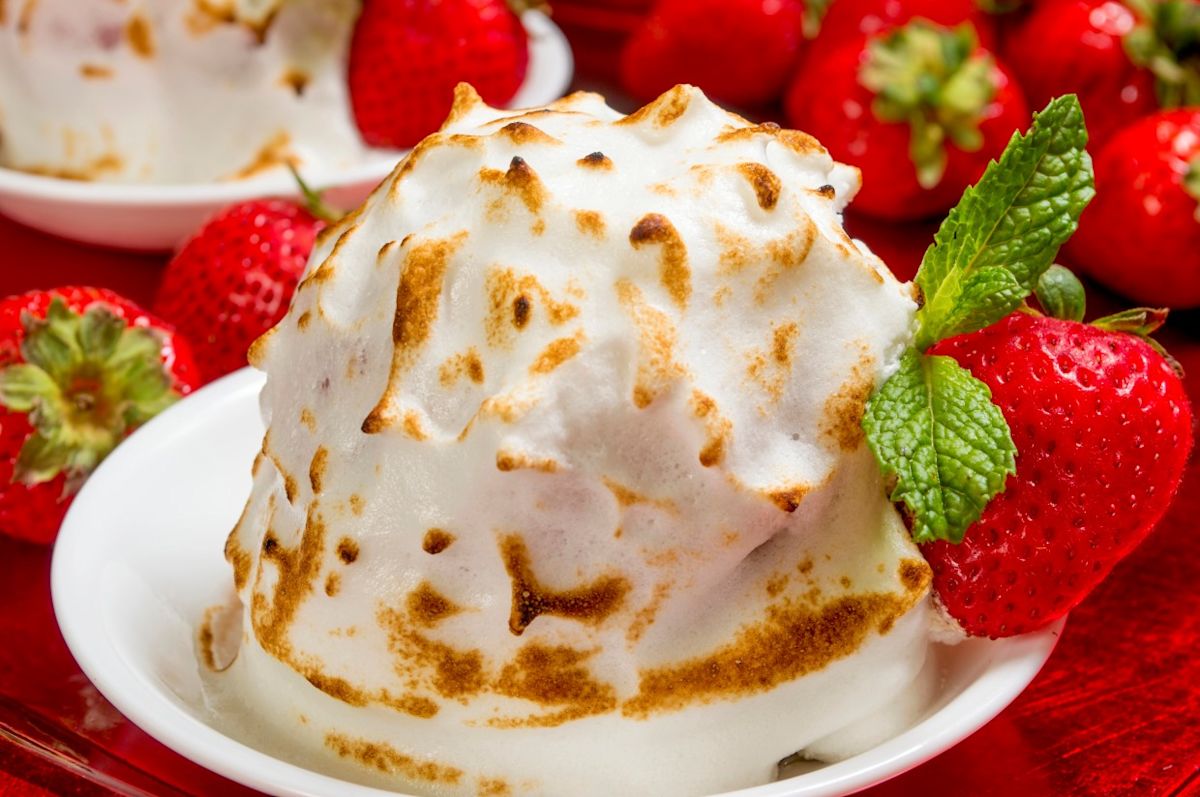
The party food of the period favored convenient, compact designs that prioritized ease of social mingling. Most appetizers were engineered to be skewered on toothpicks and enjoyed while standing upright with a beverage balanced in the other hand. For dishes requiring a sit-down presentation, hosts compensated with theatrical techniques, serving items engulfed in flames or enveloped beneath grand, sculpted domes of browned meringue.
Among the era's defining skewered creations was rumaki, a bite-sized appetizer that combined seasoned poultry offal and crunch. The preparation wrapped a tender chicken liver and a crisp slice of water chestnut inside half a strip of bacon, held together with a wooden toothpick and broiled until rendered and browned.
Despite its exotic branding, rumaki was entirely a product of the mid-century American Polynesian restaurant boom rather than a traditional Pacific Island recipe. The name itself was fabricated in the United States, intentionally crafted to evoke the mystique of distant tropical voyages for curious suburban diners seeking cosmopolitan flavors.
The culinary success of rumaki depended entirely on its marinade, which created a crucial chemical and flavor balance. A mixture of soy sauce and brown sugar effectively tempered the sharp, iron-rich flavor of the chicken liver, while the sweetness prevented the dish from becoming overwhelmingly salty once the surrounding bacon fat rendered down during cooking.
Culinary timing proved vital to achieving the proper texture. Marinating the chicken liver for merely thirty minutes left the interior bland and unseasoned, while soaking it overnight resulted in a ruined, chalky consistency. An exact marinating window of approximately two hours allowed the soy, sherry, garlic, and ginger to penetrate to the center while preserving a clean, tender slice.
Executing the dish required specific roasting mechanics to ensure proper crispness. Cooks elevated the assembled skewers on a wire rack placed within a rimmed baking pan, allowing excess grease to drip away rather than pooling around the meat. After broiling under high heat, turning the pieces once, and ensuring an internal temperature of 165 degrees Fahrenheit, the appetizers required a five-minute rest to allow the bacon to firm before serving.
Another prominent fixture of mid-century cocktail hours was crab Rangoon, a fried dumpling that paired flaked seafood with rich dairy. Like rumaki, the dish was an American restaurant invention masquerading under the geographic banner of an Asian destination—in this case, a major Burmese city. Cream cheese, the core component of the recipe, held no historical roots in authentic Burmese cuisine.
The appetizer originally gained widespread public attention on the menu of Trader Vic’s, the iconic Oakland establishment founded by restaurateur Victor Bergeron in the 1950s. From there, it became a cornerstone of themed mid-century dining before transitioning into private home repertoires.
Crab Rangoon easily shifted into household kitchens because most of its core filling components already occupied standard supermarket shelves. The sole ingredient that faced distribution delays was the square wonton wrapper. Originally restricted to urban specialty markets in Chinese neighborhoods, the wrappers eventually expanded into suburban dairy cases, allowing home cooks to assemble the crab and cream cheese filling with minimal prep work.
Mastering crab Rangoon at home required close attention to pastry structure and moisture control. A well-balanced filling of softened cream cheese, lump crabmeat, sliced green onions, soy sauce, garlic, and Worcestershire sauce needed at least thirty minutes of refrigeration to firm up. When placing the mixture into wonton skins, cooks brushed the edges with egg wash and firmly pressed out trapped air to prevent the seams from bursting during cooking.
Temperature control during the deep-frying process was equally critical. Wonton skins browned in under two minutes, meaning that excessively hot oil would darken the exterior before the interior warmed, while cooler oil resulted in a soggy, grease-laden pastry. Maintaining a constant frying oil temperature of 350 degrees Fahrenheit, achieved by frying in small batches, ensured a crisp, golden shell and a properly heated center.
These skewered and fried appetizers, alongside elaborate centerpieces like frosted sandwich loaves and baked Alaskas, defined a distinct transitional period in American cuisine. By merging commercial shortcuts with theatrical presentation, 1960s party menus allowed home cooks to bring the spectacle of modern dining straight to their living rooms.





(0)