
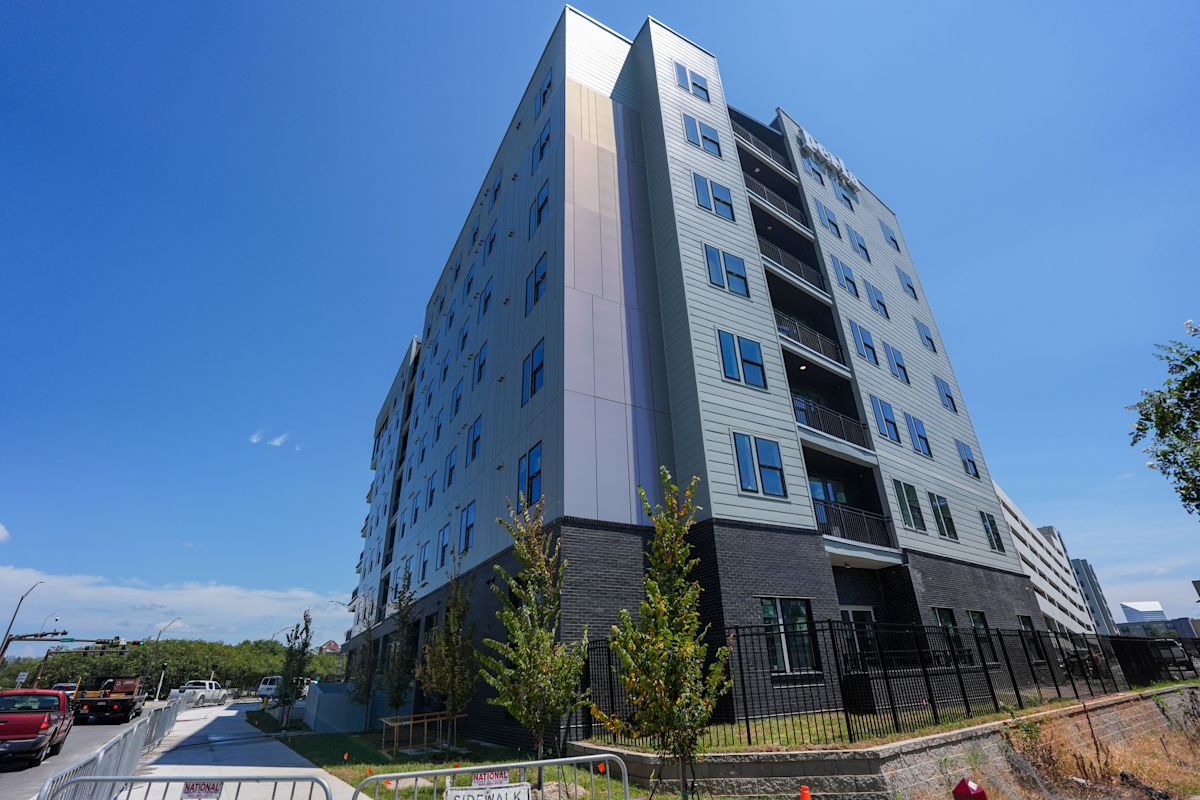
The launch of a brand-new residential complex in Tallahassee has been marred by weeks of disruption, leaving hundreds of local college students temporarily displaced at the start of their academic semester. Perla Apartments, situated directly opposite Doak S. Campbell Stadium, failed to open its doors on the initially advertised move-in date of Friday, Aug. 21, 2026. The unanticipated holdup triggered significant housing instability for incoming tenants attending nearby institutions, notably Florida State University and Florida A&M University.
More than three weeks after the initial opening date passed, tenants continue to grapple with shifting timelines and logistics. The property management team attempted to keep incoming occupants informed through a series of written notices sent across late August and early September. However, the sequence of revised projections has done little to ease the anxieties of students and parents trying to establish stable routines for the new school year.
In an electronic communication issued on Sept. 2, the complex notified future residents that their move-in operations were projected to commence no later than Sept. 12. A subsequent message delivered on Sept. 9 provided additional details regarding the certification pipeline. Management noted that the Certificate of Occupancy documentation for Buildings B and C would be filed on the following day, while promising that residents assigned to Building A would be permitted to move in no later than Sept. 19.
Despite these formal updates, tenants and family members have expressed deep dissatisfaction with how the situation has been handled. Axel Bertran de Balanda, whose child was slated to move into the facility, described the period following the postponement as an ordeal defined by ambiguity and inadequate transparency. He emphasized that the primary challenge for families was obtaining clear and reliable answers regarding the building’s operational readiness.
The widespread frustration quickly spilled over into online forums and public social media discussions. Numerous parents and enrolled students voiced their anger on platforms like Instagram, lamenting the short notice given before the initial move-in was halted. One parent publicly criticized management under a Tallahassee Democrat social media announcement, pointing out that families received less than a full day's advance warning, forcing them to quickly search for emergency housing alternatives.
The disruption has impacted students in varying degrees, with some managing to secure stable intermediate living spaces while others faced continuous upheaval. FSU international affairs major William Ales reflected on his situation, noting that he considered himself far more fortunate than many of his peers. He managed to reside in a private room without an additional roommate, had family on hand to transport his belongings, and benefited from the generosity of friends who shared their personal space.
Yet, despite escaping the worst logistical headaches, Ales stated that the overall handling by management left a lasting negative impression. He pointed out that although communications from the leasing staff included apologies, they were consistently provided too late to allow students to plan effectively. This lack of timely information generated unnecessary stress during what should have been an exciting transition into the fall semester.
For other scholars, the reality of the postponement involved extreme instability and frequent relocations between temporary lodgings. FSU freshman Amélie Bertran de Balanda experienced severe disruption during the opening weeks of her academic year. She reported having to move sequentially from an initial Airbnb rental to a second Airbnb property, before eventually being transferred into standard hotel lodging.
The temporary accommodation situation became even more complicated during Florida State Seminoles home-game weekends. Due to the high influx of sports fans and visitors filling local lodging, available hotel space in the immediate vicinity of the campus became severely constrained. As a result, several displaced students were reassigned to hotels located much farther away from their university classrooms.
These geographical shifts caused significant day-to-day challenges for students without personal vehicles. Amélie Bertran de Balanda noted that navigating transportation without a car made it particularly difficult to retrieve essential items from off-site storage lockers. The frequent shuffling between temporary quarters hindered her ability to establish a consistent academic and personal routine at the beginning of her college career.
Compounding the frustration of families were conflicting representations regarding the building's official regulatory approvals prior to August. Axel Bertran de Balanda recounted visiting the property's leasing office in early July to confirm the planned Aug. 21 move-in schedule. During that visit, he specifically asked property representatives whether the municipal Certificate of Occupancy had already been secured, and leasing staff allegedly confirmed that the documentation was already in hand.
When the delayed move-in process finally began for certain sections of the property, some families acknowledged that on-site execution had improved. Bertran de Balanda noted that once access was granted, the physical moving operations were well-organized, highlighting the presence of hired moving personnel who assisted tenants with transporting their belongings into the facility.
To mitigate the financial impact of the extended displacement, the property has pledged ongoing relief for affected tenants who remain without access to their apartments. Management's compensation package includes daily rent credits, restaurant vouchers for meals, travel assistance, and complete reimbursement for off-site storage fees.
The prolonged housing crisis around the complex has highlighted the substantial vulnerabilities college students face when transitioning into newly constructed private housing developments. Independent student media outlets, including the FSView, have reached out to Perla's management representatives for formal responses regarding the scheduling failures and communication grievances raised by incoming residents and their families.







(0)