
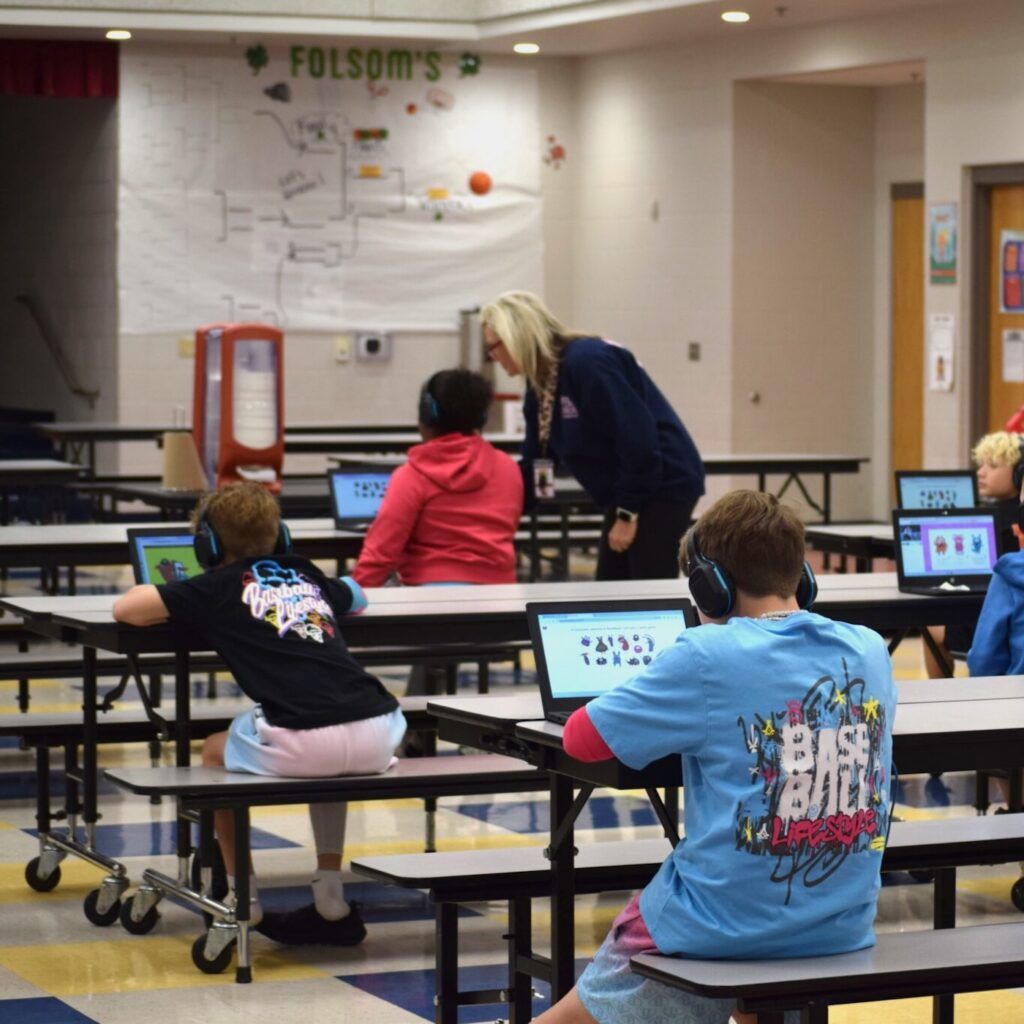
Following a major statewide mandate that took effect earlier this year, public schools throughout Ohio are transitioning from drafting artificial intelligence guidelines to managing their day-to-day impact inside the classroom. Under state law, every traditional public school district, community school, and STEM academy across Ohio was required to officially adopt an artificial intelligence policy by July 1, 2026.
With these foundational policies now enacted, educational leaders face the more complex challenge of turning administrative documents into functional teaching practices. The Ohio Department of Education and Workforce previously distributed a model policy designed to steer local districts in the right direction. That state guidance established expectations across several critical areas, including ethical considerations, student and staff platform usage, data privacy safeguards, third-party software management, instructional methods, and the overall effect of automated systems on academic assessment and learning benchmarks.
While these baseline compliance categories establish important boundaries, experts warn that a policy can satisfy state requirements on paper without resolving the fundamental dilemma facing teachers. When educators review student submissions, current policies often fail to clarify whether artificial intelligence actively supported a student's intellectual growth or merely served as an automated tool to generate finished work.
To address this gap, education policy specialist Gleb Tsipursky argues that Ohio should introduce a dedicated proof-of-learning standard during its next phase of policy implementation. Such a standard is designed to move beyond passive administrative compliance and give instructors meaningful visibility into the actual cognitive effort students invest in their coursework.
Under this proposed approach, whenever artificial intelligence materially contributes to an assignment submitted for a grade, students would be required to provide a concise four-part explanation. This disclosure would outline the exact instructions given to the platform, identify the elements of the generated output the student chose to alter or discard, document the specific claims or data verified through independent research, and describe what skills or concepts the student is now capable of performing without technological assistance.
Proponents emphasize that the scope of this requirement should remain strictly focused so it does not overburden routine classroom activities. Everyday digital conveniences, including automated spellcheck, text autocomplete features, and standard document formatting tools, would not trigger a disclosure. Instead, the reporting threshold would apply exclusively when generative tools play a substantial role in shaping a student's analytical reasoning, research synthesis, written composition, programming code, artistic design, or final academic conclusions.
This framework aligns directly with principles already highlighted in Ohio's official model policy, which explicitly instructs districts to evaluate how artificial intelligence tools alter curriculum objectives and student grading. By requiring students to document their decision-making process, schools can translate abstract educational principles into practical, transparent evaluation tools that teachers can apply to daily assignments.
The need for a transparent evaluation mechanism is heightened by the unique nature of generative artificial intelligence, which can easily disguise a student's weak comprehension behind fluent, articulate text. Because language models can produce polished responses almost instantly, students may present seemingly comprehensive work without possessing the underlying knowledge required to detect flawed logic, spot hallucinated citations, or identify superficial arguments.
Relying primarily on technological detection tools presents significant drawbacks for school environments. When institutions prioritize automated surveillance to catch machine-generated text, the classroom environment frequently deteriorates into an adversarial contest centered on student concealment. In contrast, evaluating authentic learning requires shifting the focus away from policing usage and toward examining the intellectual labor that the student performed alongside the technology.
The proof-of-learning model provides teachers with tangible evidence of student judgment across a wide variety of academic disciplines without requiring invasive digital tracking. In a history course, for example, a student might document that an artificial intelligence platform proposed three separate causes for a historical development, but the student decided to reject one factor after cross-referencing assigned primary texts.
Similar benefits apply to technical and vocational disciplines. A computer science student utilizing generative software could record that an automated code snippet failed to account for a critical edge case, subsequently explaining the manual debugging steps taken to correct the error. In career-technical programs, a student might demonstrate how an artificial intelligence-generated operational procedure was modified to conform with formal equipment manuals and workplace safety standards.
The implementation of these classroom standards comes at a time when broader state-level governance of artificial intelligence has faced procedural hurdles. Reporting from the Ohio Capital Journal in May revealed that statewide legislative initiatives to regulate artificial intelligence had stalled because of regulatory uncertainty over legal enforcement mechanisms.
In contrast to broader state regulation, the public education sector is uniquely positioned to advance meaningful standards because a formal operational structure is already established. The state legislature instituted the mandatory compliance deadline, education officials developed a comprehensive model framework, and local school boards currently hold the administrative authority needed to enforce specific classroom rules.
Establishing human accountability within Ohio's classrooms also offers crucial advantages for long-term workforce development. Modern employers increasingly expect incoming personnel to utilize modern digital tools, but businesses continue to require professionals who can independently identify technical errors, safeguard sensitive information, recognize which responsibilities require direct human intervention, and maintain responsibility for the final output.
By teaching students how to systematically evaluate, verify, and document their interactions with artificial intelligence, Ohio schools can equip graduates with skills that extend far beyond prompt generation. Ultimately, the framework aims to ensure that students enter higher education and the modern economy capable of actively supervising automated systems rather than passively relying on them.







(0)