
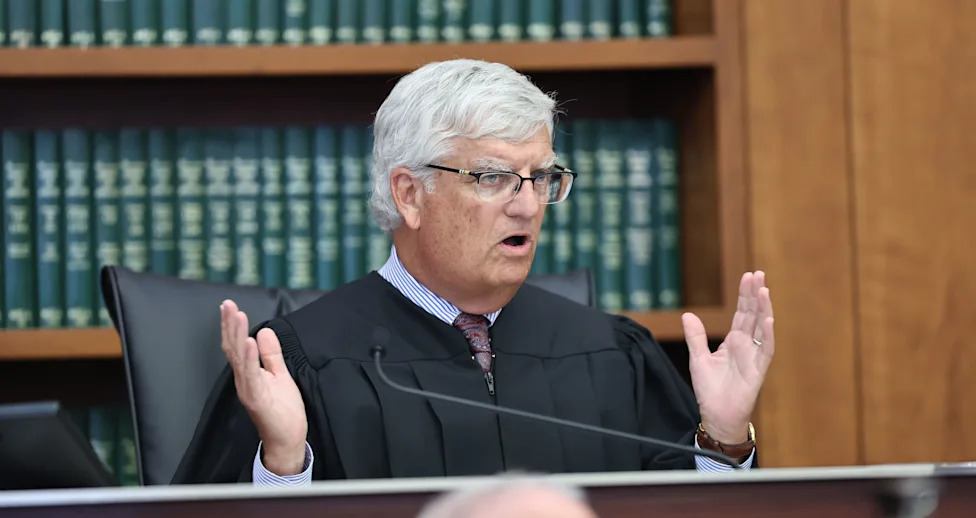
In a decisive measure aimed at protecting citizen jurors from persistent public scrutiny and harassment, Plymouth Superior Court Judge William Sullivan has issued an order indefinitely extending the impoundment of juror identities from the high-profile Lindsay Clancy murder trial. The judicial ruling prevents the public release of names and identifying details of the individuals who served on the panel during the deeply polarizing courtroom proceedings.
The decision, formalized in a written order dated September 14, comes in direct response to severe concerns regarding juror safety. Judge Sullivan underscored that the intense public fascination and divisive sentiment surrounding the criminal prosecution have persisted long after courtroom deliberations concluded, creating an ongoing atmosphere of hostility and risk for those who performed their civic duty.
The high-profile case centers on Lindsay Clancy, a mother from Duxbury, Massachusetts, who stands accused of the January 2023 killings of her three young children. From its initial stages through the courtroom proceedings, the tragic case has captured widespread attention across Massachusetts and the broader nation, drawing passionate public debate regarding the legal and moral dimensions of the allegations.
In his assessment of the environment surrounding the trial, Judge Sullivan emphasized the compounding role of modern media dissemination. The entire trial was broadcast via continuous live stream, generating daily discussions, speculative debates, and commentary across various social media platforms and news outlets that heightened the exposure of every participant in the courtroom.
The judge cited several concrete incidents of harassment and privacy breaches that occurred during and immediately following the trial as justification for the protective extension. Among the most alarming developments was the criminal arrest of an individual who was caught secretly recording jurors on video as they exited the Plymouth courthouse facility, leading to intimidation-related charges.
Court findings also revealed that unauthorized actors had gathered and disseminated personal identifying information belonging to jurors without their consent. The circulation of these private records online elevated security concerns among court officials, illustrating the dangers posed by digital doxing and unauthorized surveillance in modern judicial proceedings.
Judge Sullivan noted that the request for continued anonymity was echoed directly from within the jury box itself. At least one serving juror formally petitioned the court to keep the impoundment order active indefinitely, emphasizing that the danger of retaliation and harassment remained tangible. In his ruling, the judge affirmed that there continues to be a "real and present" danger to the well-being of the jurors and the overall integrity of their service.
Under standard Massachusetts legal principles, the names and official rosters of jurors are considered public records accessible to the press and the broader community upon the completion of a trial. However, judges retain the statutory authority to restrict public access when compelling circumstances and significant safety risks warrant extraordinary intervention.
In weighing these competing legal interests, Sullivan determined that standard public access rights were decisively outweighed by the imperative to ensure physical safety. The judge concluded that making the comprehensive juror list public under current conditions would almost certainly result in "immediate and irreparable injury" to the panelists and their families.
The renewed impoundment order follows the chaotic conclusion of the trial earlier this month. On Friday, September 4, Judge Sullivan was forced to declare a mistrial after the jury formally notified the court that they were hopelessly deadlocked and completely incapable of reaching a unanimous verdict on the charges.
In the aftermath of the mistrial, public reactions have remained volatile. While a small number of individual jurors have voluntarily chosen to give media interviews and speak publicly regarding their deliberation experiences, the vast majority of both deliberating and alternate jurors have adamantly declined interview requests, opting to preserve their privacy and anonymity.
The court made clear that the impoundment directive applies strictly to official judicial records and does not function as a blanket gag order on the panelists themselves. Individual jurors retain their constitutional right to speak openly about their courtroom service or voluntarily reveal their identities to the public if they independently choose to do so.
With the trial having ended without a verdict, the criminal proceedings against Clancy remain unresolved. Prosecutors from the district attorney's office and Clancy's defense team are currently preparing to return to the Plymouth courtroom later this month to litigate critical post-trial motions and chart the subsequent legal path forward.
Among the immediate matters before the court is a defense motion seeking a formal judgment of acquittal. Clancy's legal representatives argue that the evidence presented by the Commonwealth during the trial was legally insufficient to sustain a conviction, while prosecutors evaluate their options regarding a potential retrial.
The indefinite shielding of the Clancy jury underscores the broader systemic challenges facing the American judicial system in an era of ubiquitous digital media and rapid online mobilization. By maintaining a strict barrier around juror identities, the court has prioritized juror welfare as the legal community watches the next phase of this complex case unfold.







(0)