
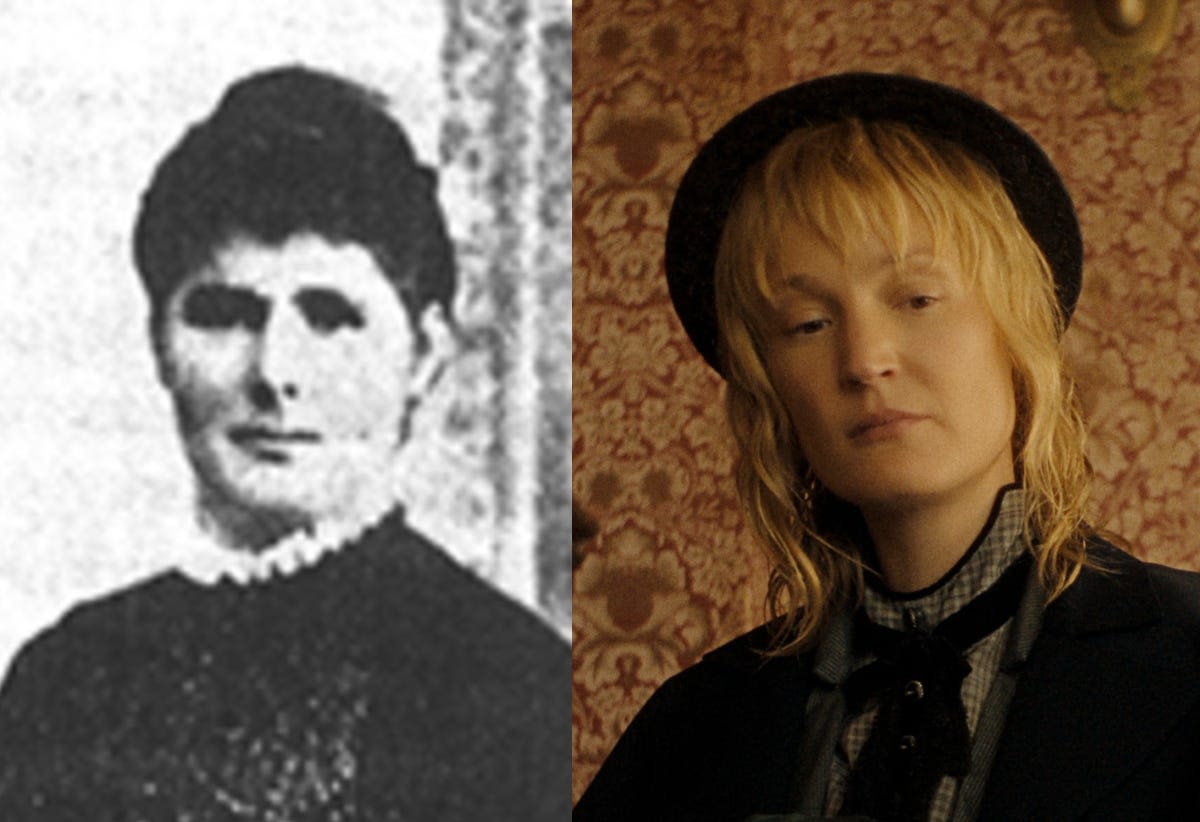
The upcoming premiere of Ryan Murphy’s true-crime television anthology series, "Monster: The Lizzie Borden Story," has once again placed international attention on the infamous 1892 double homicide that shocked Fall River, Massachusetts. Centered around the brutal hatchet slayings of Andrew and Abby Borden inside their Second Street home, the Netflix production revisits the central figures of the Victorian-era tragedy. Among the key players highlighted in promotional trailers is the family’s domestic servant, Bridget Sullivan, who stood as one of the earliest witnesses to the violent aftermath and has long remained a figure of intense public intrigue.
In the streaming dramatization, actor Vicky Krieps takes on the role of Sullivan, appearing alongside Ella Beatty, who portrays Lizzie Borden. Notably, Krieps depicts the Borden family maid while speaking with a distinct German accent, despite the historical figure being an Irish immigrant. This artistic choice comes amid broader scrutiny from observers who question how closely the television series will adhere to verified nineteenth-century records, particularly regarding Sullivan's actual experiences, motives, and proximity to the crime scene.
Throughout the decades following the murders, historical inquiries and dramatic adaptations have regularly scrutinized Sullivan's exact role in the household, with some observers even speculating whether she acted as an accessory to the killings. A review of established historical accounts, however, provides a grounded portrait of an immigrant worker navigating a deeply fractured domestic environment. Sullivan originally entered the employment of the Borden family in 1889, tasked with handling relatively light household chores across the Second Street property.
During her three years of service, Sullivan witnessed substantial interpersonal friction festering between the family members. In particular, she was positioned directly between Andrew Borden’s adult daughters, Emma and Lizzie, and their stepmother, Abby Borden. The persistent hostility directed at Abby created an uneasy domestic atmosphere, causing Sullivan considerable discomfort as she attempted to carry out her daily responsibilities in the residence.
According to historical research compiled by authors Michael Martins and Dennis Binette in their seminal Fall River history book "Parallel Lives," the strain within the home nearly drove the domestic servant away on multiple occasions. Martins and Binette document that Sullivan attempted to resign from the household more than once, only to be persuaded to remain after Abby Borden intervened, which included securing a wage increase for the maid on at least one occasion.
Sullivan’s personal view of the Borden family dynamic was later corroborated by contemporary media reports. Following the double murder in 1892, the Boston Post reported Sullivan as stating that Abby Borden was "too good for them," referring to the sisters, while emphasizing that Lizzie and Emma harbored open dislike toward their stepmother.
The social divide between the sisters and their domestic employee was also evident in everyday communication. Emma and Lizzie routinely referred to Sullivan as "Maggie" rather than addressing her by her actual given name. While modern analysts have wondered whether the practice reflected a subtle lack of personal regard for Sullivan—especially given that the Borden daughters contributed little to the daily housework—the custom of addressing domestic staff by generic substitute names was relatively widespread among higher social classes during the late nineteenth century.
In addition to household social tensions, the days immediately preceding the August 4, 1892 slayings were marked by physical illness that swept through the Borden residence. Several members of the household suffered from nausea and discomfort, a condition widely attributed to food-borne illness resulting from sweltering summer temperatures combined with the home's lack of adequate refrigeration.
Although local lore frequently suggested that the household was poisoned by spoiled mutton served for breakfast, official testimony indicated that family members had already fallen ill before any mutton was prepared or consumed. The illness did not spare the household staff, and Sullivan was similarly incapacitated by severe nausea on the morning the murders took place.
Court testimony established that shortly before 9 a.m. on the morning of August 4, Sullivan completed serving breakfast to the household and stepped outside into the yard to vomit. After taking a few minutes to recover from the sudden bout of sickness, she returned to her chores and began washing the home's windows. It was during this general window of time that both Abby and Andrew Borden were struck down and killed with a hatchet inside the residence.
Beyond the physical events of that morning, pop-culture retellings have frequently gravitated toward sensationalized romantic theories linking Sullivan and Lizzie Borden. Speculative narratives have repeatedly proposed that the two women maintained a clandestine lesbian affair, alleging that a secret romance may have motivated them to orchestrate the violent demise of Andrew and Abby Borden together.
This romantic hypothesis has been explored across various creative works, including Evan Hunter's 1984 novel "Lizzie," the 2018 feature film "Lizzie" starring Chloë Sevigny, and the fourth season of the Netflix "Monster" anthology. Nevertheless, verified archival documents contain no evidence indicating that Sullivan was a lesbian or that her dynamic with Lizzie Borden ever crossed beyond the conventional boundaries of an employee and employer relationship.
Following the conclusion of the high-profile Lizzie Borden murder trial, Sullivan sought a total departure from the scrutiny that had overwhelmed Fall River. She returned overseas to Ireland for a brief period before eventually emigrating back to the United States. However, she deliberately avoided Fall River for the remainder of her life, closing the chapter on her involvement with the Borden household.








(0)