
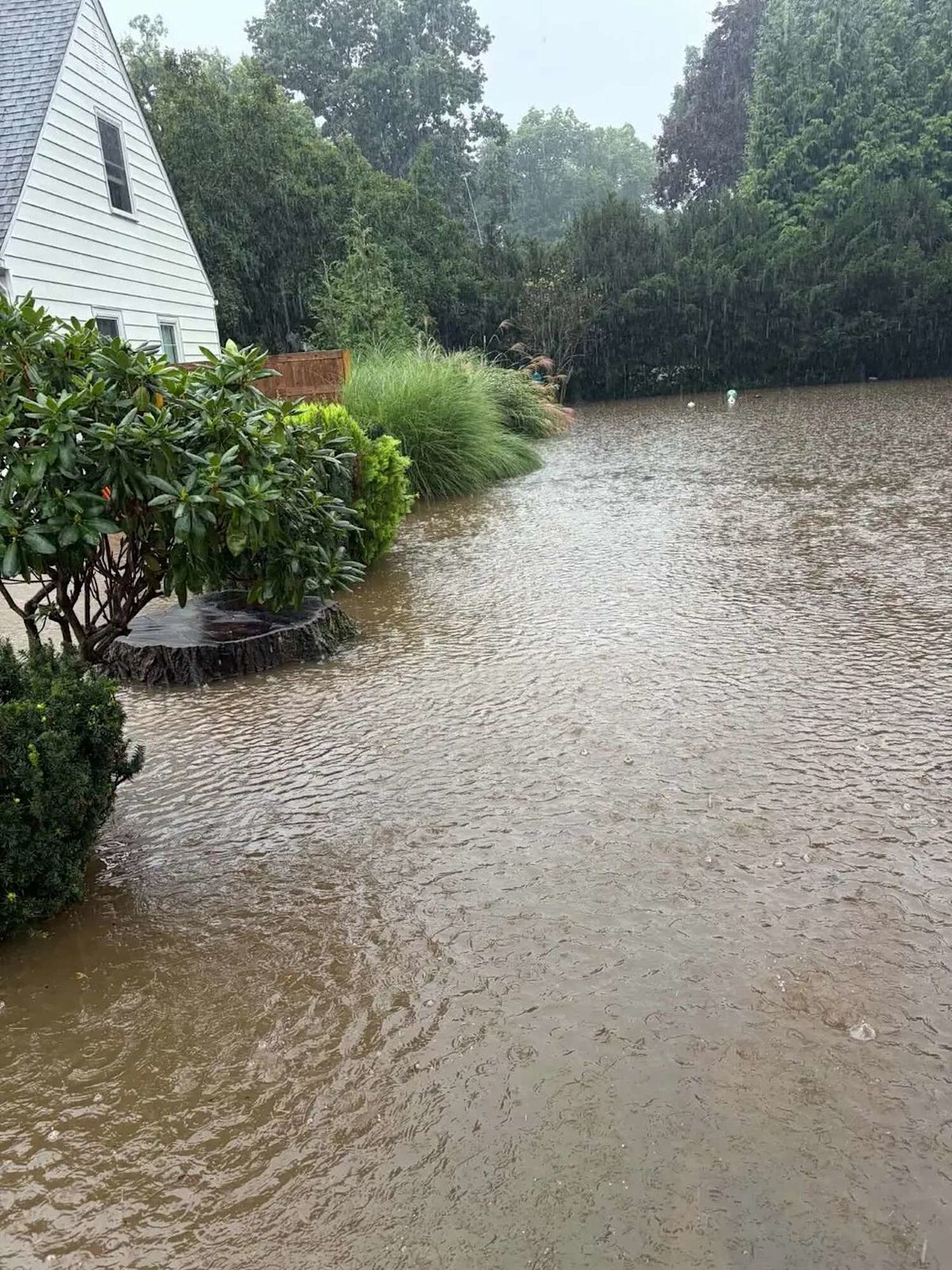
For Fairfield resident George Paci, cleaning up after heavy rainfall has become an exhausting, repetitive routine. Just months after clearing a couple of feet of floodwater from his basement, Paci found himself grappling with roughly seven feet of water following a torrential weekend storm. The latest disaster has intensified his frustration with local government officials, whom he faults for years of delayed flood mitigation along the Rooster River watershed.
The deluge inundated numerous properties across Fairfield, leaving many Connecticut residents without electrical power and prompting emergency responses. First Selectperson Christine Vitale emphasized the severity of the weekend weather, noting that the community experienced an extraordinary downpour of more than six inches of rain in a remarkably brief timeframe. According to Vitale, the rapid accumulation overwhelmed drainage infrastructure and led to basement flooding even in homes that typically remain dry during severe storms.
Paci described the rapid escalation of the river overflowing its banks, observing the floodwaters creep steadily toward his residence until his entire yard was submerged under two feet of water. Within approximately 20 minutes of entering the house, the water surged dramatically to a depth of seven feet inside the basement, climbing high enough to reach the structural floor joists of the first floor.
The flooding also caused significant damage to Paci’s detached garage, which was inundated with water and layers of mud from the submerged yard. Despite operating a sump pump along with two additional drainage pumps, his efforts to clear the basement proved futile. Because the surrounding ground was already completely saturated, the pumps merely recycled water back into the inundated yard, providing no relief.
The aftermath has left Paci and his wife facing substantial financial and personal disruption. Sunday's disaster marked their fourth major flood event in the past eight years, an ongoing struggle that has forced Paci to purchase his third furnace, third washing machine, third electrical panel, and fourth clothes dryer over that timeframe. In addition to major household appliances, several expensive power tools were left submerged and may be ruined by rust before he can safely test their functionality.
With further precipitation in the near forecast, Paci has been forced to pile salvaged belongings on his lawn as he attempts to dry out the lower level of his home. Expressing deep fatigue, he noted that neighbors feel trapped in an unmanageable predicament, pointing out that selling their properties is virtually impossible given that prospective buyers would steer clear of a residence with a well-documented history of recurring, severe flooding.
Town officials have acknowledged the longstanding nature of the problem along the Rooster River corridor. Public Works Director Frank Petise stated that addressing the river's chronic flooding emerged as a local municipal priority roughly eight to ten years ago. However, he explained that progress has been slowed by lengthy regulatory processes, as proposed engineering solutions required comprehensive permitting reviews from both the Connecticut Department of Energy and Environmental Protection and the U.S. Army Corps of Engineers.
Municipal leaders initiated preliminary design efforts for the Rooster River watershed following destructive regional flooding in 2018. Over the intervening years, the town has assembled an approved flood mitigation budget totaling $8.2 million to execute multiple infrastructure upgrades and watershed management initiatives.
The accumulated funding package includes $4.5 million in municipal bonding approved by the town, alongside $2.5 million secured in state financial support. Additional capital comprises a $280,000 grant from the Connecticut Department of Energy and Environmental Protection and $750,000 in American Rescue Plan Act funding contributed by neighboring Bridgeport, which owns the Fairchild Wheeler Golf Course located within the watershed.
According to Petise, two key detention basin initiatives were officially placed out for competitive bidding earlier this summer. These projects—located at Tunxis Hill Park and the Fairchild Wheeler Golf Course—are scheduled to break ground before the end of the month. A third detention basin is currently in the design phase, though its implementation requires ongoing negotiations with private property owners to secure necessary land easements.
In addition to the construction of detention basins, town plans incorporate dredging operations along designated sections of the Rooster River to improve water flow and storage capacity. Petise projected that once the full suite of planned mitigation projects is completed, the collective infrastructure improvements could diminish regional flooding by 30 percent or more.
Despite these assurances, long-suffering homeowners remain skeptical about whether the upcoming public works projects will offer sufficient protection. Having waited years for tangible construction to begin, Paci noted that many neighborhood residents harbor little confidence that the town's proposed measures will adequately safeguard their properties against future river surges.
Petise highlighted that changing climate conditions and intensified precipitation patterns continue to challenge stormwater systems, classifying Sunday's rainfall event as the equivalent of a 100-year storm, which carries a 1% statistical probability of occurring in any given year. He emphasized that the community is witnessing a measurable increase in the frequency and intensity of extreme storm events.
The severe weather also brought scrutiny regarding emergency communications, as several local residents reported not receiving direct flash flood notifications on their mobile devices during the storm. In response, Vitale explained that municipal administrators chose to rely on the National Weather Service's broadcast warning system, which automatically transmits alerts to all mobile phones within an affected geographic zone without requiring prior sign-up, while local officials focused on delivering town-specific situational updates via social media channels.







(0)