
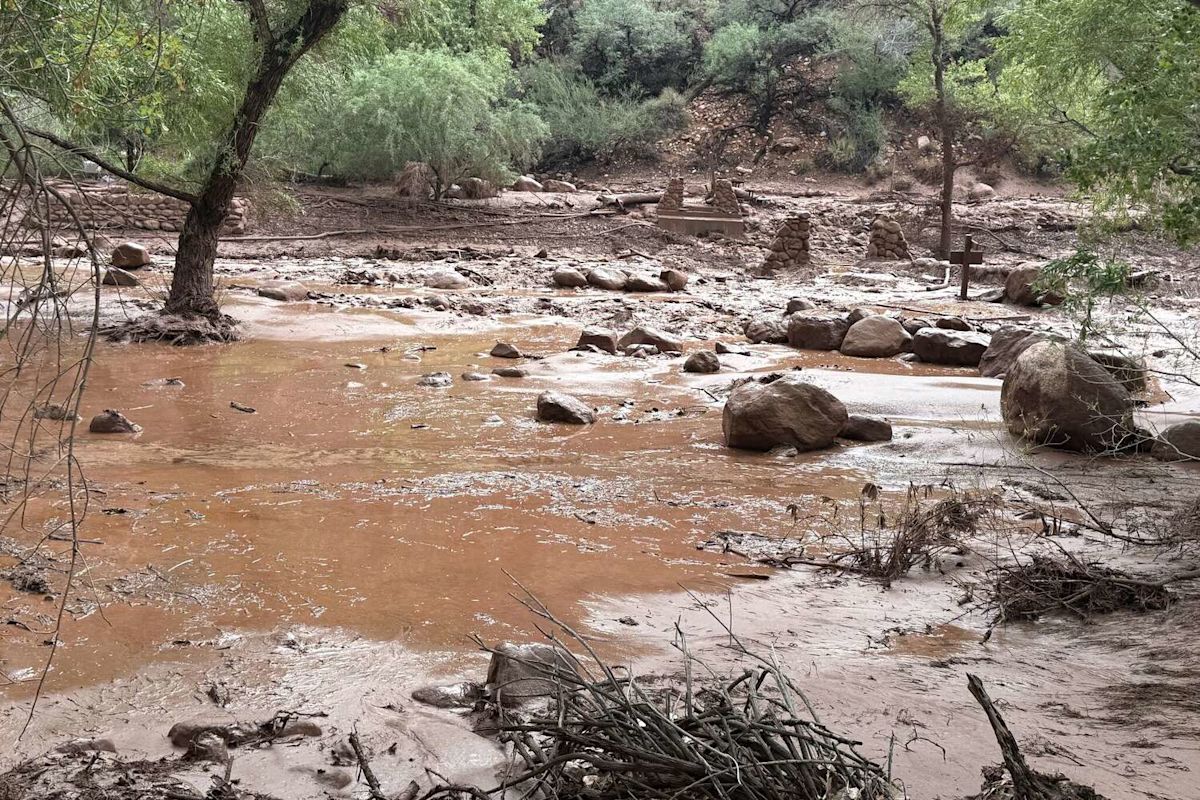
A catastrophic flash flood in Grand Canyon National Park has left authorities searching for over 20 people feared missing after the violent surge of water swept through the park's Bright Angel Canyon. The incident, which occurred on Saturday afternoon, followed a deluge of heavy rainfall that inundated the area.
The storm, which struck around 2:30 p.m., brought more than an inch of rain in just an hour, falling atop recently burned areas. This combination of rain and dry terrain sent a torrent of mud and debris cascading down the canyon, overwhelming the infrastructure in its path.
The floodwaters rose with alarming speed, swelling to over 5 feet in just 10 minutes. This sudden surge washed away bridges across Bright Angel Creek, including the iconic Bright Angel Bridge, and forced the closure of one of the park's most challenging trails. A flash flood watch was issued for the Grand Canyon through Monday, as forecasters warned of continued dangerous downpours in the region.
The National Park Service (NPS) reported on Sunday morning that 62 campers and hikers had been airlifted from the affected area. However, despite intensive search efforts, over 20 individuals remain unaccounted for. The NPS is appealing to the public for any information regarding hikers or backpackers who may have been in the inner canyon along the Bright Angel Creek corridor on August 29. They have specifically requested information on individuals who were traveling along the North Kaibab Trail, staying at the Bright Angel Campground, or in the area known as 'the Box' north of Phantom Ranch.
Park officials have closed Phantom Ranch, Bright Angel campground, the Phantom Ranch canteen, and cabins, along with the North Kaibab Trail. The Colorado River has also been shut down to traffic, as metal structures and other debris have entered the waterway. The Black Bridge and Silver Bridge crossings over the Colorado River have also been closed.
The park service warned that additional closures may be necessary as the threat of more thunderstorms and heavy rainfall continues to loom over the Grand Canyon. Cell phone service throughout much of Northern Arizona is challenging to maintain, and satellite phones are being tested with some success in areas outside the narrowest portions of the canyon.
The recent flood comes a year after the Dragon Bravo Fire swept through the Grand Canyon's North Rim, destroying a historic lodge and altering the landscape. The heavy rain on burned landscapes can trigger debris flows, a slurry mix of mud, trees, and rocks, particularly in areas affected by moderate to high-severity fires. An assessment by the NPS last summer found that the debris flow risk was localized to steep, confined drainages, such as Dragon Creek and upper Bright Angel Creek.
The National Weather Service has warned of a slight risk of excessive rainfall capable of triggering flash flooding across the Four Corners region on Monday, with a moderate risk in south-central Utah. Short-duration rain bursts, such as thunderstorm downpours, are more likely to trigger debris flows than long-duration moderate rainfall.
The NPS is urging caution and preparation for anyone planning to visit the Grand Canyon, particularly during the monsoon season when flash flood risks are at their highest. The agency has also advised visitors to stay informed about weather conditions and to heed all park warnings and closures.






(0)