
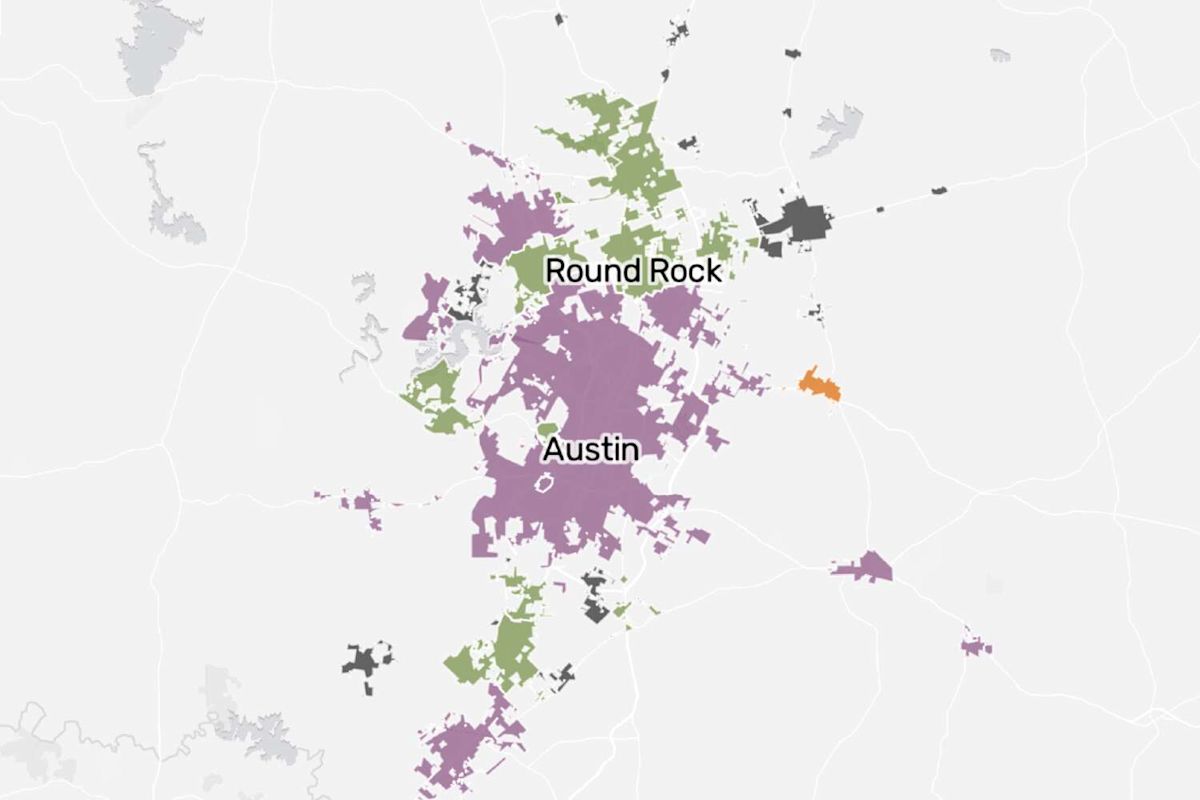
Across Central Texas, local governments are increasingly fractured over the adoption and retention of automated license plate reader technology. A comprehensive review of public records, municipal actions, and local reporting across Travis, Williamson, Hays, and Bastrop counties reveals a sharply divided region, where several communities are embracing the surveillance tools while others move aggressively to dismantle or suspend their programs.
The regional assessment by the Austin American-Statesman underscores how rapidly the landscape has shifted for automated license plate recognition systems. While municipal law enforcement agencies historically adopted the vehicle-tracking hardware with little public resistance, mounting concerns over data sharing and digital privacy have prompted a wave of contract cancellations, administrative pauses, and debates over voter referendums.
Currently, nine Central Texas municipalities maintain active license plate reader networks. These jurisdictions include Bee Cave, Buda, Cedar Park, Georgetown, Hutto, Lakeway, Mustang Ridge, Round Rock, and West Lake Hills. In these cities, automated cameras continue to scan passing vehicles, cross-referencing registration numbers with law enforcement databases to assist patrol officers and investigators.
In contrast, nine other cities in the four-county area have formally terminated their agreements with reader vendors. That list includes Austin, Bastrop, Lago Vista, Leander, Liberty Hill, Manor, Pflugerville, San Marcos, and Sunset Valley. Additionally, the city of Elgin has placed a temporary pause on its camera deployment, signaling widespread municipal hesitation to maintain ongoing vendor relationships.
At the center of the local controversy is Flock, an Atlanta-based vendor that provides automated license plate readers to police departments and municipalities nationwide. The company has faced escalating scrutiny from residents and civil liberties advocates who warn that the automated logging of vehicle movements creates a pervasive surveillance infrastructure capable of monitoring ordinary drivers.
The debate over the technology highlights fundamentally competing priorities in modern policing. Proponents argue that automated plate scanners are indispensable tools for public safety, enabling law enforcement to quickly locate stolen cars, recover missing persons, and identify vehicles connected to serious criminal investigations.
Conversely, critics contend that building searchable repositories of vehicular travel creates unprecedented risks to personal privacy. Detractors point out that when location data is stored long-term and shared across regional, state, or federal networks, it enables broad surveillance that can track the routines and movements of individuals who are not suspected of any wrongdoing.
The regional backlash gained significant momentum following an August 25 decision by the Pflugerville City Council to terminate its contract with Flock. The move was prompted by an inquiry from a local resident who sought access to audit logs detailing which external law enforcement entities had searched Pflugerville’s captured vehicle data.
Pflugerville’s decision triggered a cascade of similar actions in neighboring municipalities. Shortly after the vote, officials in Manor, Leander, and Elgin moved to either cancel or suspend their respective camera programs, reflecting growing unease over how vehicular data was managed and accessed by outside jurisdictions.
The city of Bastrop took an even more decisive stance during its municipal deliberations. In addition to canceling its operational contract, the Bastrop City Council enacted a comprehensive ban prohibiting the use of automated license plate reader technology within the municipality altogether.
These local policy reversals also unfolded against broader state-level interventions. Texas Governor Greg Abbott previously issued a directive instructing state agencies to cease spending public funds on Flock camera systems, further intensifying scrutiny on local government contracts with the vendor.
In the region's largest municipality, the status of license plate readers presents a unique operational complexity. The Austin Police Department ceased direct access to an automated license plate reader database after the city's contract with Flock expired in 2025.
However, Austin officers can still obtain license plate surveillance data through secondary channels by requesting information from partner law enforcement agencies that maintain lawful access to the systems. Because Austin lacks formal written agreements governing these inter-agency data exchanges and does not systematically track when officers receive such information, local observers have raised questions regarding compliance with city surveillance standards and oversight policies.
Other municipalities have chosen alternative paths rather than executing outright cancellations. On September 5, the Kyle City Council rejected a proposal to terminate the city’s agreement with Flock. Instead of ending the program, council members opted to consider placing a nonbinding measure on the May 2027 municipal ballot, allowing local voters to directly express whether the city should continue deploying license plate readers.
Elsewhere in the region, several communities report no active engagement with the technology. Municipal officials in Dripping Springs, Rollingwood, and Smithville have confirmed that their jurisdictions do not utilize automated license plate readers.
Meanwhile, the operational status of plate readers remains unconfirmed in a dozen other area municipalities. Local officials in Bartlett, Coupland, Creedmoor, Florence, Granger, Jarrell, Jonestown, Taylor, Thorndale, Thrall, Weir, and Wimberley did not respond to inquiries regarding whether their law enforcement departments employ the technology.
As discussions surrounding privacy, vendor transparency, and inter-agency data sharing persist, Central Texas remains an uneven patchwork of surveillance policies, with neighboring cities operating under fundamentally different rules regarding the monitoring of public roadways.








(0)