
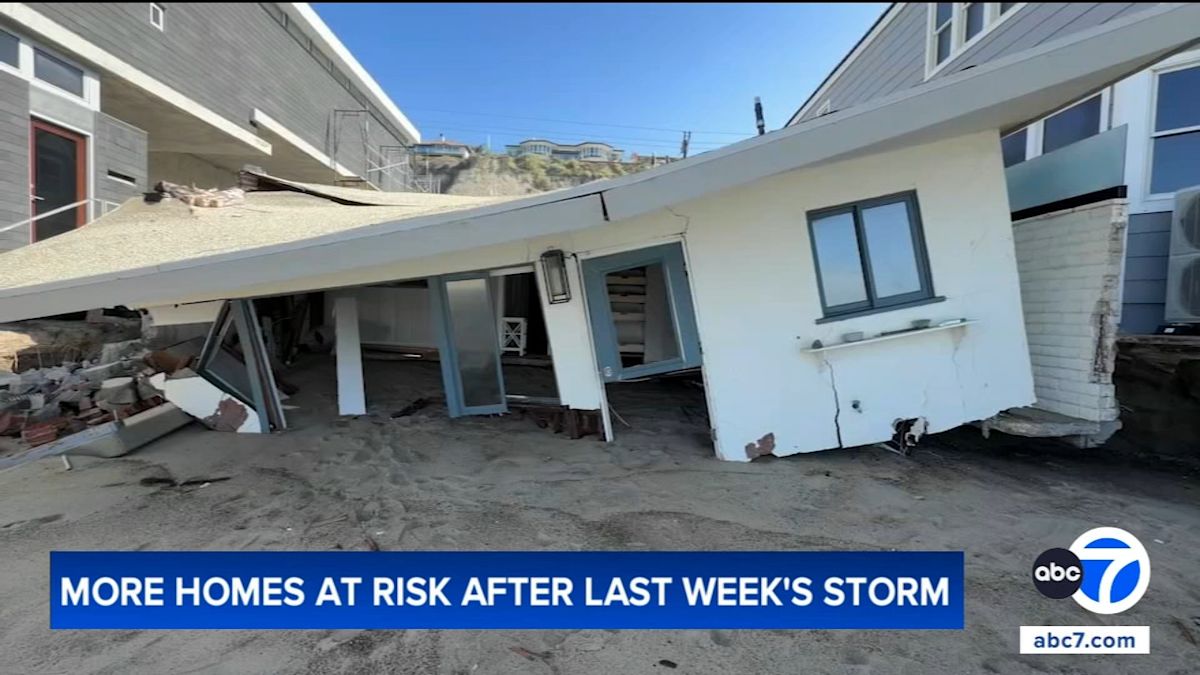
A severe coastal crisis continues to unfold along the Southern California shoreline as violent ocean swells generated by Hurricane Marie have left multiple waterfront properties in Capistrano Beach severely damaged or on the verge of collapsing into the Pacific Ocean. Following the destruction of at least one structure that began sinking into the surf, local safety officials have stepped in to evaluate neighborhood safety, declaring ten additional homes along the coast entirely unsafe for occupation.
The compounding damage has struck the Beach Road community within the city of Dana Point, where oceanfront residences have borne the brunt of relentless wave action and rapid beach erosion. In response to the escalating structural threats and the loss of protective shoreline, the city of Dana Point has officially issued a local declaration of emergency to mobilize resources and acknowledge the severe hazards confronting neighborhood properties.
Municipal building inspectors conducting safety evaluations have officially red-tagged ten homes along Beach Road, barring residents from entering due to compromised foundations and severe structural instability. An additional seven residences have received yellow tags, indicating that the properties have suffered substantial damage and remain subject to strict occupancy limits while structural assessments continue.
Among the most heavily impacted residents are Amy and Chris Rogers, who experienced catastrophic losses when intense waves battered their beachfront house. The surging tides completely ripped away their exterior back deck, leaving their residential kitchen hovering directly over the crashing ocean waters below and rendering the home uninhabitable.
The Rogers and their neighbors have voiced escalating frustration regarding what they characterize as an acute lack of institutional disaster assistance in the aftermath of the storm. According to the homeowners, there has been no tangible mobilization of financial relief, physical equipment, or organized ground support from municipal, county, state, or federal emergency response agencies to help protect the shoreline.
Describing the psychological and emotional strain of watching their neighborhood deteriorate, the Rogers explained that they experienced the full spectrum of grief in the span of just four days. While the initial days following the storm were marked by shock and grief, that reaction has transformed into profound anger over what coastal residents describe as an entirely preventable catastrophe exacerbated by bureaucratic delays.
Although the initial high-energy swells generated by Hurricane Marie have begun to taper off, the destabilizing impacts on the coast have not abated. Without a natural sand buffer to absorb wave energy, normal tidal activity continues to wash away underlying soils, perpetuating a slow-motion disaster that threatens to pull additional structures down toward the tideline.
In an effort to provide short-term relief, a spokesperson for the California Coastal Commission confirmed that the state regulatory agency has approved emergency permit applications for 17 separate properties in the area. These emergency authorizations permit affected property owners to implement temporary defensive armoring, including the urgent placement of large protective boulders along the base of their vulnerable properties.
Despite these approvals, beachfront homeowners have sharply criticized the administrative hurdles and stringent limitations governing the emergency permitting system. Under current regulations, property owners seeking permission to fortify their parcel must submit a $1,600 application fee by mail simply to secure a temporary protective measure authorized for only 120 days.
Residents point out that the temporary nature of the permit creates an arduous cycle of enforcement, as homeowners are legally required to remove every boulder and piece of protective armoring at the end of the four-month period. Property owners argue that having to dismantle their protective barriers after 120 days leaves the shoreline exposed once again to future wave action, undermining their personal investments and safety.
The Coastal Commission has historically maintained that hard armoring structures, such as seawalls and rock revetments, can accelerate localized coastal erosion, narrow public access, and damage the natural dynamics of public beaches. The impacted residents acknowledge these environmental concerns, stating that while rock barriers are an imperfect emergency measure, the broader failure lies in the absence of proactive, large-scale beach nourishment projects to replenish vanishing sand.
To address the broader scope of the crisis, local legislative leaders have stepped in to push for higher-level government intervention. A representative for California Assemblywoman Laurie Davies confirmed that the lawmaker is actively petitioning Governor Gavin Newsom to declare a formal State of Emergency for the entire coastal zone, a move that could unlock crucial state resources and streamline mitigation efforts.
For homeowners like Amy and Chris Rogers, the immediate future remains fraught with uncertainty as they await formal determinations from their insurance carriers. The family is currently waiting to learn whether any remaining portion of their beachfront structure can be safely salvaged and repaired, or if the entire house will ultimately need to be torn down and rebuilt from the ground up.







(0)