
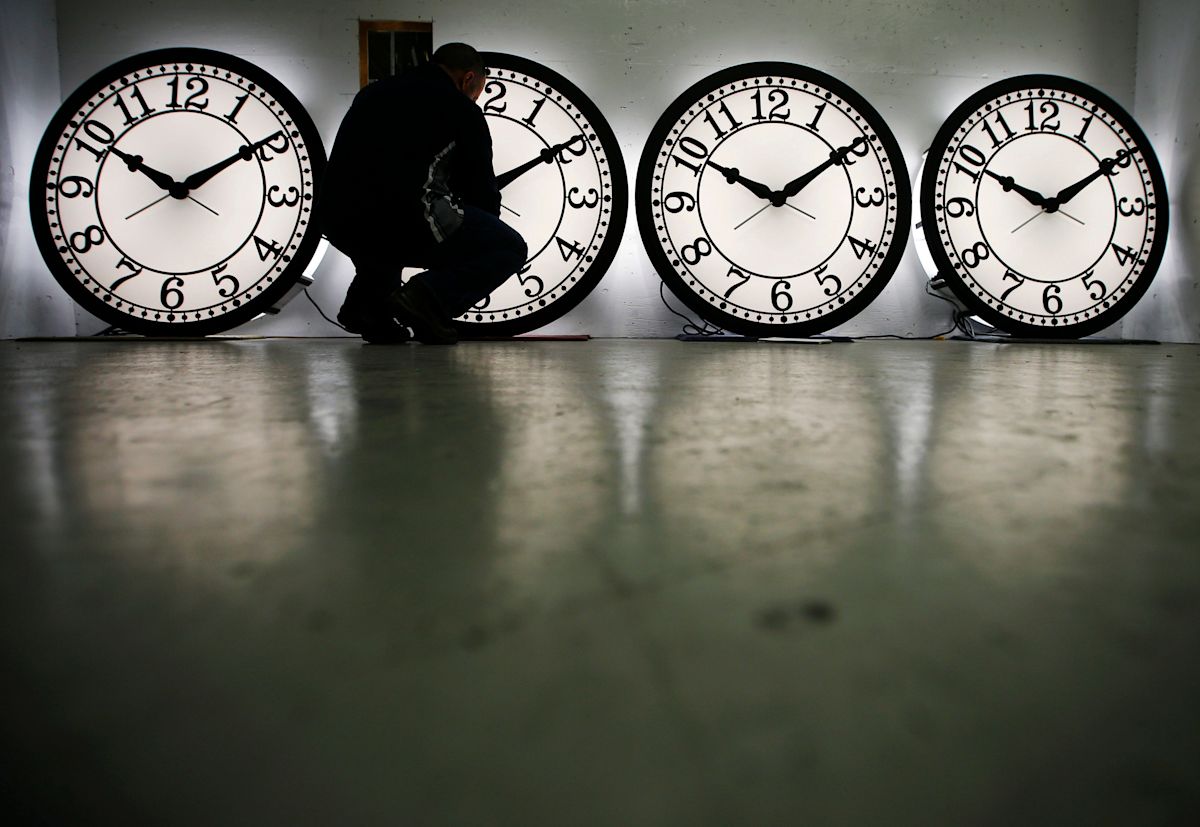
As autumn approaches across the United States, millions of Americans are getting ready to adjust their timepieces for the seasonal end of daylight saving time. The upcoming time change has once again brought national attention to the ongoing legislative and public debate surrounding whether the country should abolish the biannual clock adjustment altogether or establish a permanent standard.
The scheduled adjustment will officially take place on November 1, when clocks across participating regions will move backward by one full hour from 2:00 a.m. to 1:00 a.m. This seasonal shift marks the familiar "fall back" transition, which provides individuals with an extra hour of sleep overnight, contrasting with the springtime shift where an hour of sleep is lost in exchange for later evening daylight until autumn returns.
Modern electronic equipment and internet-connected devices, including mobile smartphones and home computers, are programmed to update their internal clocks automatically when the shift occurs. However, non-connected equipment and standard household items, including kitchen appliances, dashboard clocks inside automobiles, and traditional wall timepieces, will still require manual adjustment by their owners.
The upcoming clock rollback applies across much of the United States, including in Mississippi. Operating within the Central time zone, Mississippi actively observes daylight saving time, meaning that residents and local businesses throughout the state will follow the nationwide schedule and adjust their clocks backward by an hour on the designated November date.
Despite the routine nature of the biannual time change, federal officials and lawmakers have continued to question the necessity of the practice. President Donald Trump has repeatedly weighed in on the issue, expressing strong opposition to adjusting the nation's clocks twice each year and advocating for an immediate end to the alternating system.
In a public message shared on Truth Social on August 4, Trump criticized the recurring time change as foolish, inconvenient, and in certain circumstances, highly costly. The president stated that the American public has grown sick and tired of having to adjust their clocks twice a year, arguing that establishing a fixed schedule would eliminate unnecessary disruption for households across the country.
Trump outlined several key arguments in favor of adopting permanent daylight saving time rather than continuing the current cycle. He asserted that locking in permanent daylight saving time would help reduce the frequency of traffic accidents, lower rates of crime, decrease overall energy usage, and provide families with more valuable daylight during the evening hours.
Emphasizing his preferred solution to the debate, Trump pushed for swift legislative intervention by the federal government. The president urged lawmakers to leave timekeeping as it currently stands and never change it again, explicitly calling on the United States Congress to pass the Sunshine Protection Act as soon as possible.
Any lasting modification to how daylight saving time is observed across the country requires formal legislative adoption by Congress. Several bills have been introduced by federal lawmakers over recent sessions, proposing different statutory approaches such as enacting permanent daylight saving time nationwide or granting individual states the authority to decide their own time arrangements.
The House of Representatives has already taken action on the matter by approving the Sunshine Protection Act, which is designed to make daylight saving time permanent nationwide. However, following the conclusion of a five-week recess on September 14, the Senate returned to Washington without a vote scheduled on the legislation, despite repeated calls from the president to advance the measure swiftly.
Health advocates and daylight analysts note that adopting daylight saving time on a year-round basis does not alter the actual amount of sunlight that occurs naturally each day. Instead, the policy simply shifts the existing daylight hours into a later window on the clock, resulting in later sunrises as well as later sunsets throughout the calendar year.
Supporters of the traditional system maintain that the alternating schedule provides practical advantages throughout the changing seasons. Advocates contend that springing forward in the spring and falling back in the autumn helps reduce general energy expenditures while maximizing usable daylight during typical waking and working hours.
Conversely, medical specialists and sleep researchers have raised persistent concerns regarding the physiological impact of alternating between time standards. Health experts argue that shifting the clock twice a year imposes unnecessary stress on human biological systems and interferes with natural sleep patterns.
Erik Herzog, a professor of biology and neuroscience at Washington University in St. Louis and a former president of the Society for Research on Biological Rhythms, has argued that establishing permanent standard time would serve as the healthiest choice for the public. Herzog explained that biannual clock adjustments disrupt human circadian rhythms, which function as the body's internal clock governing sleep cycles and other essential biological processes.
Medical research underscores that the springtime clock change is particularly challenging for the human body. The sudden loss of an hour during the spring shift has been directly linked to measurable increases in severe cardiovascular events, including heart attacks, as well as an uptick in motor vehicle accidents on the nation's roadways.
The United States has previously experienced year-round daylight saving time, having implemented an experiment with a continuous schedule in 1974. Until the Senate takes up the pending legislative proposal and sends a finalized bill into law, Americans will need to continue following current timekeeping rules and prepare to turn their clocks back on November 1.





(0)