
Throughout modern history, September 13 has repeatedly served as a date of profound transformation, defined by watershed political agreements, defining moments of armed conflict, cultural tragedies, and devastating natural disasters. From the birth of patriotic anthems under heavy bombardment to groundbreaking diplomatic signings on the world stage, this calendar day preserves significant events that have shaped nations and international relations across multiple centuries.
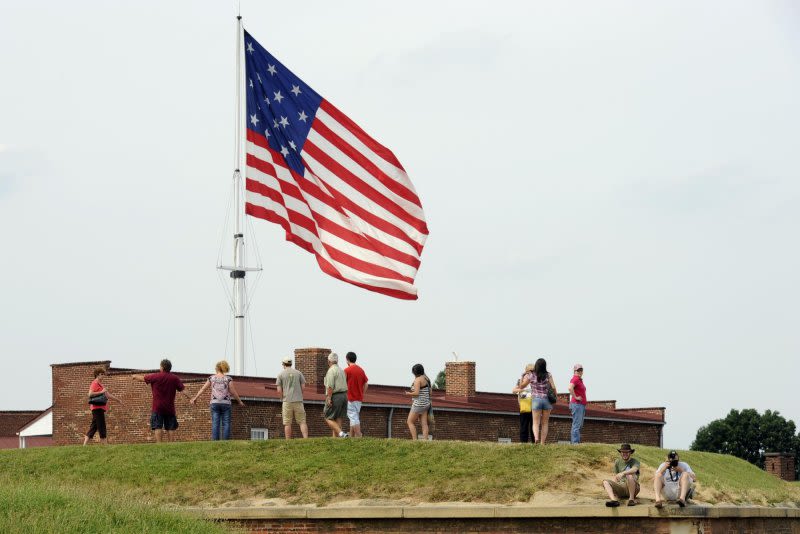
One of the most enduring moments on this date occurred in 1814 during the War of 1812. As British naval forces staged an intense bombardment against Fort McHenry in Baltimore, Maryland, an American lawyer and poet named Francis Scott Key watched the relentless assault unfold. Deeply moved by the sight of the American flag continuing to fly above the fortress in the midst of the battle, Key penned the verses that would subsequently become the national anthem of the United States, "The Star-Spangled Banner."
The successful defense of Fort McHenry during that pivotal September 13–14 engagement turned Key's poetic observation into an enduring symbol of national endurance. His lyrics captured the tension and relief of an emerging nation surviving a ferocious foreign assault, leaving a permanent imprint on the cultural identity and patriotic heritage of the United States.
More than a century later, September 13 witnessed another major wartime trial, this time in the heart of Great Britain. On this day in 1940, during the height of the German Blitz over London, a bomb strike destroyed the private royal chapel at Buckingham Palace. The royal estate was targeted and struck on nine distinct occasions over the course of World War II, bringing the harsh realities of the conflict directly to the doorstep of the British monarchy.
The assault on Buckingham Palace served to galvanize the British public against foreign aggression. Ten days after the chapel was leveled, King George VI publicly addressed the nation, speaking out firmly against the "wickedness against which we fight" and signaling that the royal family shared the same perils and hardships being endured by regular citizens across the battered capital.
Political barriers were broken on September 13, 1948, when Margaret Chase Smith achieved a landmark victory by winning election to the United States Senate. Representing the state of Maine as a Republican, Smith had previously served in the U.S. House of Representatives, making her the very first woman in American history to serve in both chambers of Congress.
Smith's ascent to the Senate marked a historic milestone for female representation in the upper corridors of American legislative power. Her dual-chamber service paved the way for subsequent generations of female lawmakers, proving that women could successfully navigate the political landscape and secure leadership roles in both the House and the Senate.
Domestically, the date is also tied to one of the deadliest and most infamous correctional crises in modern American memory. On September 13, 1971, New York state forces launched an armed assault to retake control of the Attica state prison following days of tense standoffs and inmate uprising. The violent operation resulted in the deaths of 43 individuals, exposing severe systemic issues within the penal system and triggering decades of debate over institutional oversight and the governance of corrections facilities.
On the diplomatic front, September 13, 1993, brought a historic breakthrough in the long-standing Middle East conflict. In a widely watched ceremony held on the South Lawn of the White House, Israeli Prime Minister Yitzhak Rabin and Palestine Liberation Organization Chairman Yasser Arafat signed a declaration of principles aimed at establishing a framework for Palestinian self-rule.
The 1993 accord represented a critical attempt to forge a structured path toward peace through mutual recognition and direct negotiation between long-standing adversaries. By formalizing agreements on the terms of regional governance, the signing became an iconic moment of late-twentieth-century international diplomacy.
Cultural history was marked by grief on September 13, 1996, when prominent rap artist Tupac Shakur succumbed to injuries sustained during an ambush shooting. Shakur had been critically wounded six days earlier in a September 7 attack, and his death at a young age silenced one of the most influential and commercially successful voices in modern hip-hop music.
Following the devastating terrorist attacks of September 11, 2001, September 13 of that year marked the initial, tentative steps toward reopening the nation's transportation infrastructure. On this date, domestic commercial carriers were finally authorized to resume flights across the country.
However, the resumption of air travel arrived alongside an entirely new operational paradigm. Federal authorities and aviation officials instituted sweeping, heightened security protocols across American airports, permanently altering the passenger screening process, baggage handling procedures, and terminal operations to protect against future acts of terror.
International human rights made significant progress on September 13, 2007, when the United Nations General Assembly officially adopted the Declaration on the Rights of Indigenous Peoples. Although the United States cast a dissenting vote against the resolution, the global assembly broadly supported the measure to prohibit systemic discrimination against native populations worldwide.
While non-binding, the 2007 declaration established an unprecedented international framework safeguarding indigenous heritage. The comprehensive document formally outlined collective and individual protections concerning culture, native language, self-identity, access to healthcare, education, and fair employment opportunities.
Nature delivered a catastrophic blow on September 13, 2008, when Hurricane Ike made a devastating landfall along the Texas coast. The massive storm struck Galveston and Houston with ferocious 110-mph winds and torrential rainfall, triggering widespread coastal flooding, tearing apart physical infrastructure, and cutting electrical power to millions of residents.
The human and economic toll of the disaster was immense, prompting approximately one million people to flee the coastal zone. Hurricane Ike ultimately claimed more than 100 lives across the United States and caused roughly 75 fatalities in Haiti, standing as a sobering reminder of the lethal vulnerability of coastal communities during peak hurricane seasons.
From the creation of national symbols in the heat of battle to historic treaties signed under the gaze of world leaders, September 13 reflects a broad spectrum of human experience. The diverse events spanning this day highlight recurring themes of resilience, political evolution, and the enduring challenges posed by societal upheaval and natural catastrophes.






(0)